Albemarle County, Virginia: Green Leader No More
by Tom Olivier
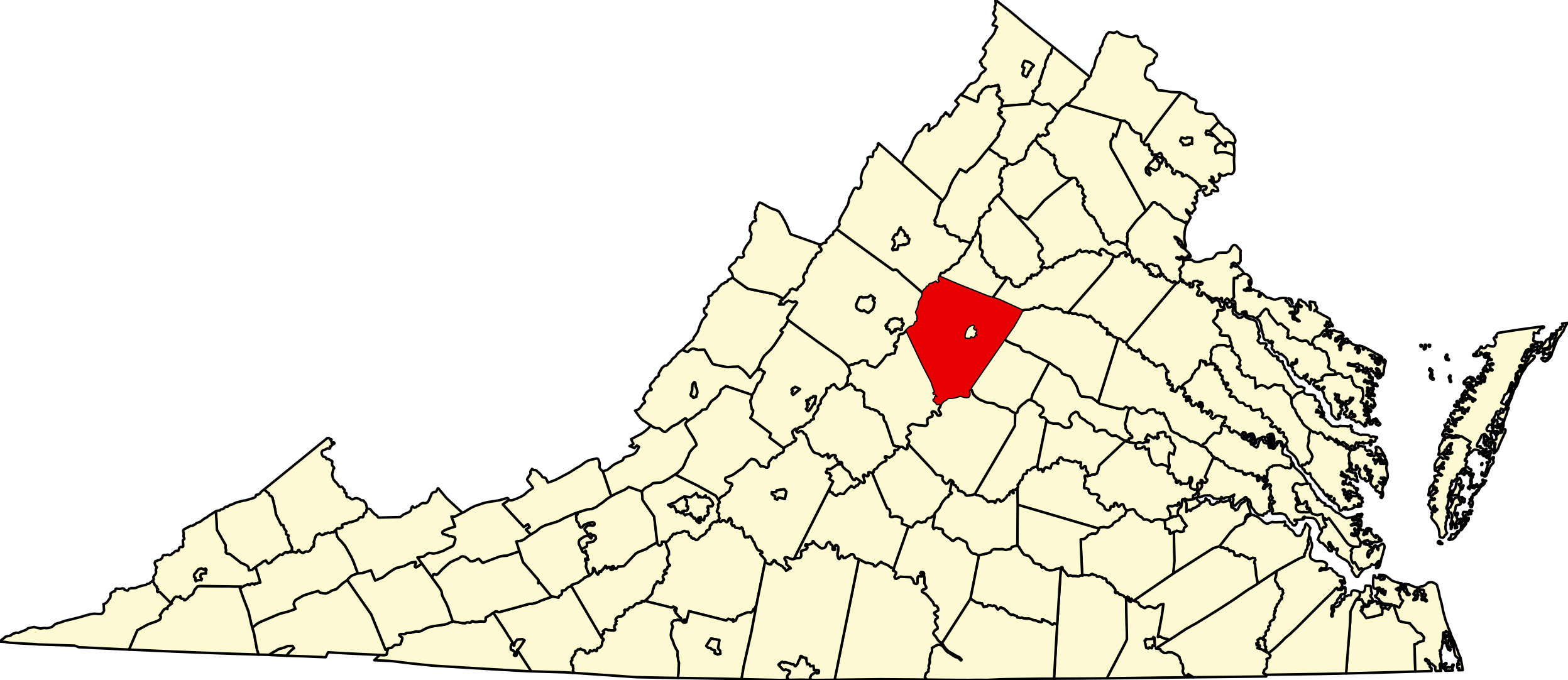
Albemarle County is in the heart of Virginia. (David Benbennick, Public Domain)
I’ve lived in Albemarle County, Virginia, for over forty years. Albemarle is a mostly rural county in the Piedmont region. It surrounds the city of Charlottesville.
For decades, the county valued its open spaces and created many policies to ensure their protection. Recently, leadership has taken a pro-development turn, jeopardizing citizens’ quality of life and many of our community’s natural features.
In the 1990s and 2000s, the Albemarle County government took a cautious approach to growth and development. During this period, conservative and progressive board members alike played key roles in establishing environmental programs and policies. County planners were generally supportive of integrating conservation proposals into planning policies. So was the county public.
In the 1990s, Albemarle County participated in the regional Thomas Jefferson Sustainability Council, created two open-space easement programs, and established a now 20-year-old program to monitor and protect its biodiversity. The county has a natural resources manager on staff who supports a range of conservation efforts.
During the 2000s, Albemarle County helped fund a series of studies by Advocates for a Sustainable Albemarle Population on the optimum population size of the Albemarle-Charlottesville community. In recent years, the county committed to becoming carbon neutral by 2050, developed a climate action plan, and established a staffed climate program.
Changing Times
Beginning with the Great Recession of 2008 and the rise of the Tea Party, the local political environment shifted. In 2010, a bloc of conservative members of the board of supervisors launched a financial austerity campaign. Consequences included a significant reduction in planning staff, reduced interest in environmental protection, and expanded interest in economic development.
This bloc didn’t last. Today, all the Albemarle County supervisors are Democrats. However, like their Republican predecessors, Democratic supervisors in recent years have supported economic development, ignoring most of its associated costs. In January of this year, two new supervisors joined the board. Time will reveal their inclinations toward growth.
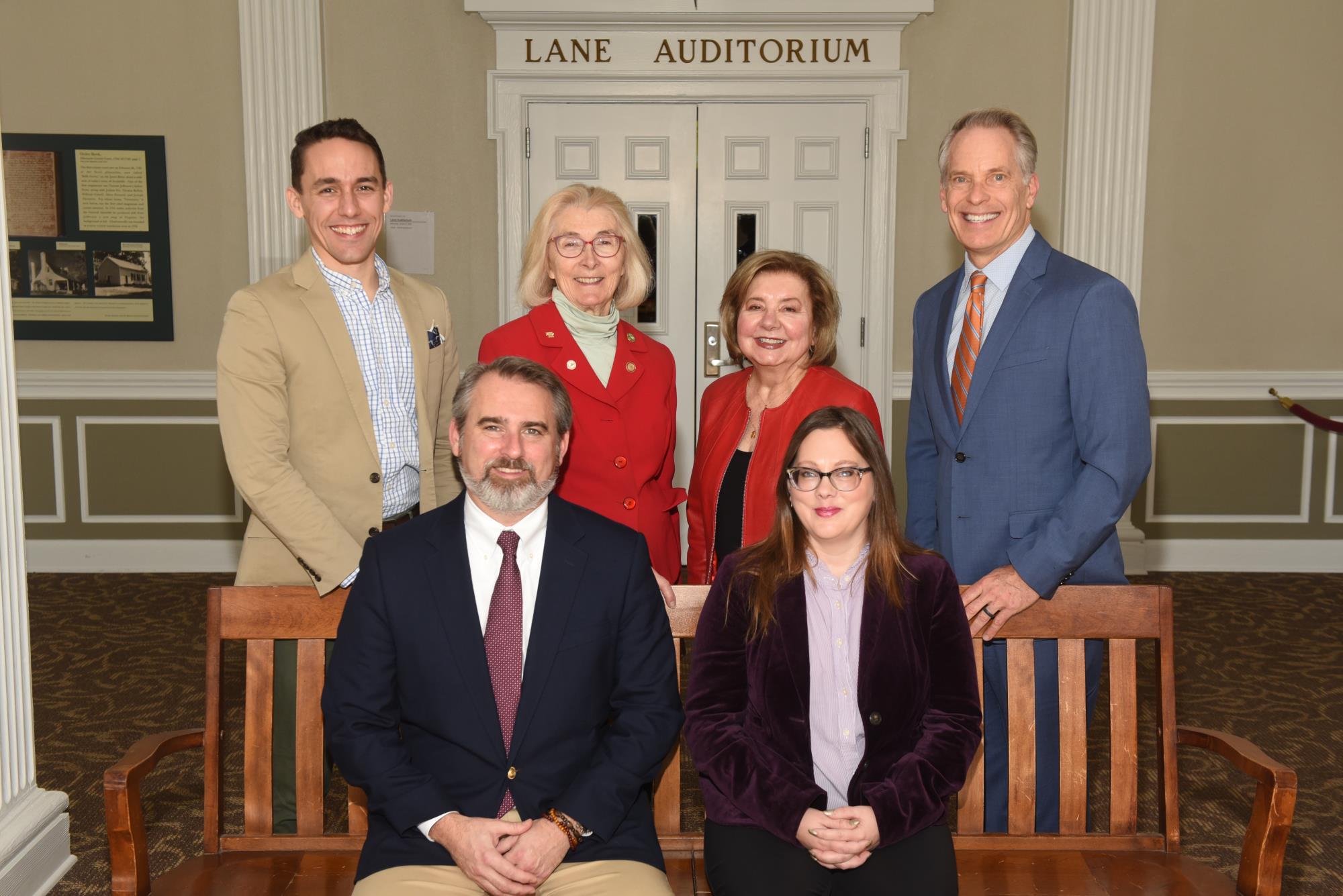
Albemarle County’s current board of supervisors. (Albemarle County Government)
The 2020–2023 COVID-19 pandemic heavily impacted Albemarle County political dynamics. Activist attendance at public meetings fell off and hasn’t recovered. County policy formation suffers from the reduction of this environmental activist community, which has historically shown up at public meetings and held decision makers accountable.
Residents still support environmental protection, including climate action, and many of the green programs of past decades remain in place. However, we have new leadership in the county that is zealously pursuing economic growth and has shown little interest in examining its environmental consequences.
A New (Not Improved) Comprehensive Plan
Albemarle County completed an update of its comprehensive plan in October 2025. The update began in late 2021. At the start of the update, nearly all the planners were recent additions to the county staff, with few intellectual ties to past county policies. They initially proposed a nearly complete scrapping of the old, widely admired plan. Changes included jettisoning the key rural areas chapter.
The public pushed back, leading eventually to the inclusion of a rural areas chapter in the new plan. The planners made a commitment to create an in-depth, standalone rural areas conservation plan, similar to the county’s biodiversity action plan.
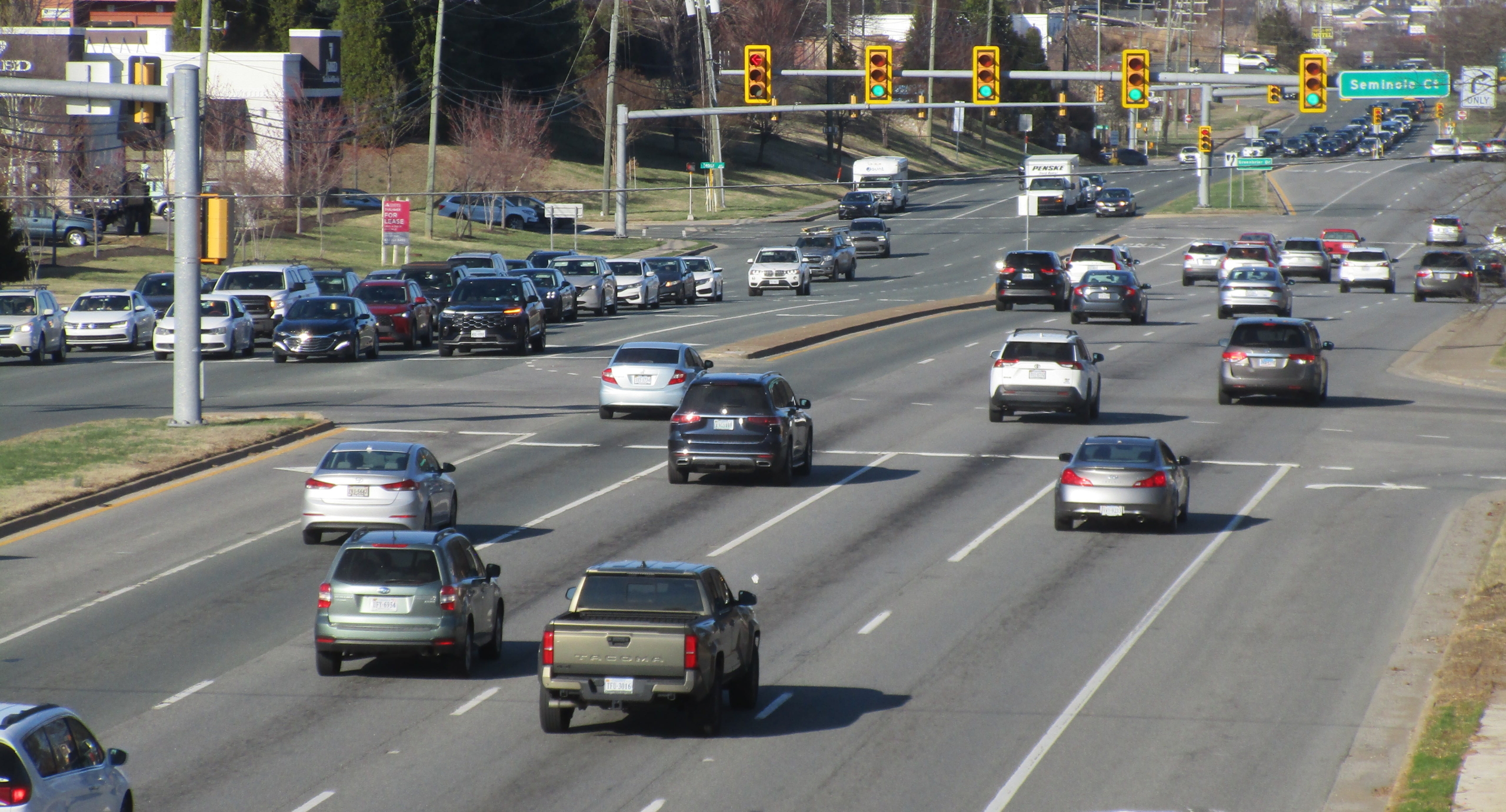
Highway 29N, the main business corridor in Albemarle County, has been key to economic development.
For all its previous caution about promoting growth, Albemarle County never quite endorsed a stable population or a steady state economy, either. Its growth management policy has been and continues to be an orderly accommodation of growth, which leadership perceives as inevitable. According to the new comprehensive plan, the county’s population is projected to increase by 31,000 by 2044. Planners take this growth as a given and focus the plan on providing housing and other infrastructure to accommodate it.
Rivanna Futures is Hatched
In Virginia, economic development gets special treatment. With the rationale that proprietary information should not be publicly disclosed, the Code of Virginia allows local governments to close meetings at which economic development projects are discussed. Partnerships between local governments and businesses can be hatched and approved without sunshine, and without their environmental consequences adequately weighed.
In 2023, the Albemarle County supervisors announced that the county had already agreed to purchase 462 acres of land for $58 million. This land adjoins Rivanna Station, a U.S. Defense Department installation and a significant contributor to the local economy. According to officials, the county purchased the land to provide room to expand Rivanna Station and supporting industries. The supervisors deemed the purchase necessary to prevent Rivanna Station from relocating to another community.
The county’s plan for development of these acres is referred to as the Rivanna Futures project. The government expects the project to anchor development of a larger, regional, high-tech “Innovation Corridor.” A high-ranking county official suggested the Rivanna Futures project might “realize a level of potential similar to Silicon Valley at its onset.”
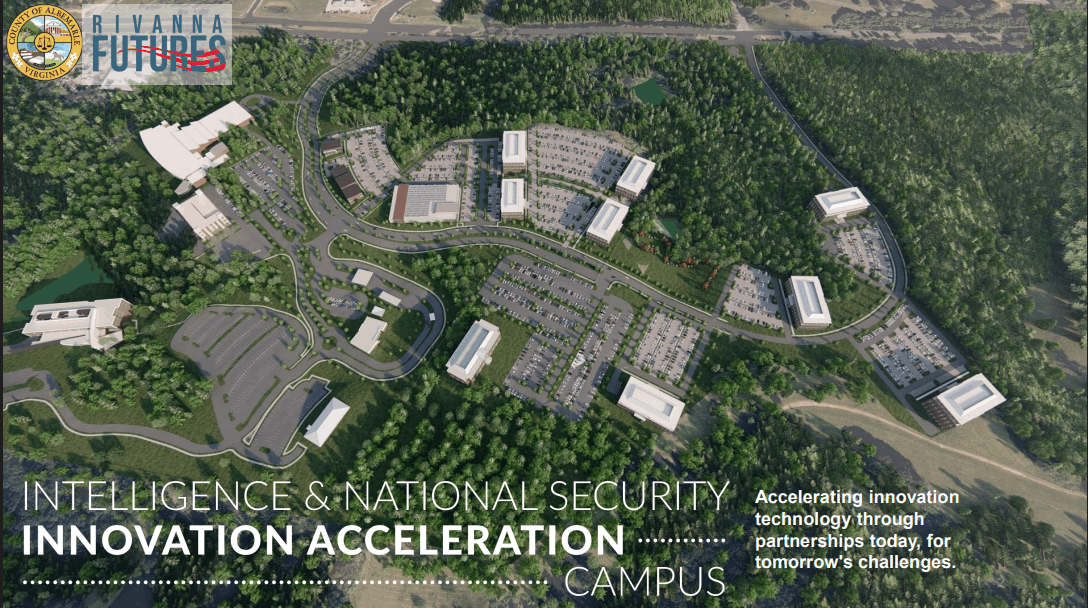
A concept map of the Innovation Acceleration Campus, part of the Rivanna Futures project, presented to the Albemarle County Board of Supervisors. (Albemarle County Government)
According to an engineering analysis of Rivanna Futures, the project could create nearly 900 new jobs. As has been the case for other such projects, many of the new jobs undoubtedly would be filled by people who move to the county with their families.
The county is behind schedule in meeting its commitment to become carbon neutral by 2050. Its climate action plan emphasizes the preservation of its forested land, while leaders pursue growth projects that entail substantial deforestation. Wary of simultaneous climate and development promises, residents asked the county to conduct analyses of greenhouse gas emissions and other environmental impacts of Rivanna Futures before considering a required rezoning.
Albemarle County applied to itself for permission to rezone the property that it purchased for tens of millions of dollars. The deputy county executive submitted the application, and the board of supervisors judged it. During the review, Planning Commissioners complained that supporting documents submitted by the county fell far below the standards usually required from applicants. Even the Free Enterprise Forum, a business-friendly interest group, critiqued the county for giving itself preferential treatment.
The county government defended its actions by claiming it needed a quick rezoning to apply for state economic development funds. Albemarle County approved its rezoning without the environmental analyses requested by activists. The county subsequently received a grant of $9.7 million from the Virginia Economic Development Partnership to prepare the Rivanna Futures site for building. This rezoning process illustrates conflicts of interest that arise when local governments play developer.
In October 2025, AstraZeneca announced it would build a $4.5 billion pharmaceutical plant on the Rivanna Futures property. The plant will provide 600 new jobs. This project may receive a special appropriation from the state of Virginia for $191.3 million.
The People Press Pause on a Data Center Proposal
Rivanna Futures isn’t the only development project favored by some leaders of the Albemarle County government. They recently considered a new data center ordinance. The proposed ordinance would have allowed data centers of up to 500,000 square feet to be built by right in designated overlay zones. An overlay is when an additional set of regulations is superimposed on an existing zoning district.
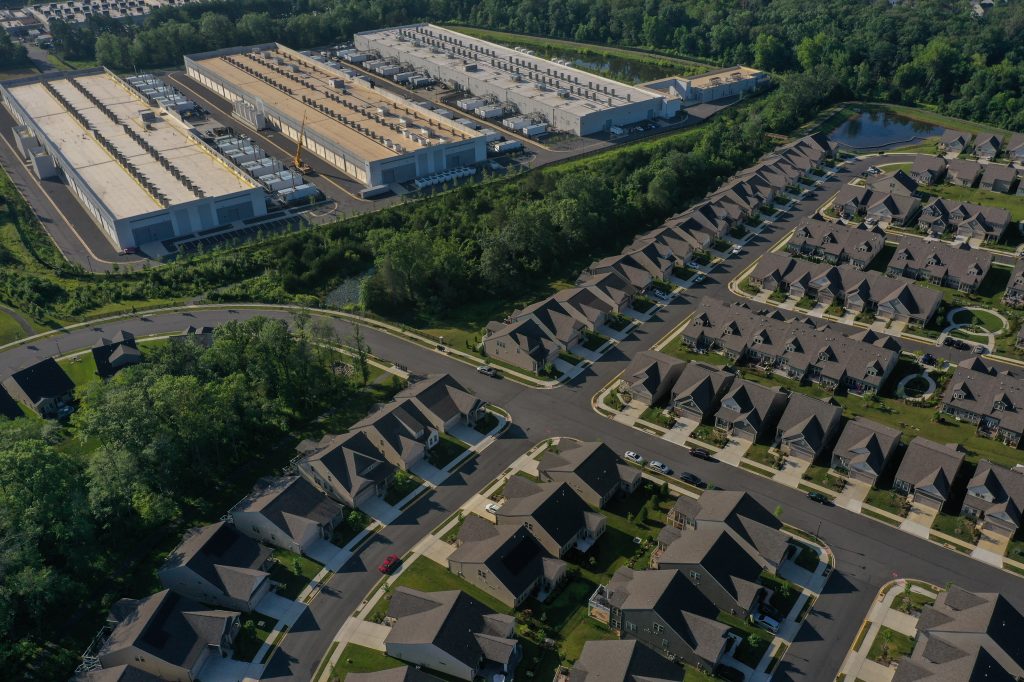
A massive, noisy data-center complex in another Virginia county, Loudoun. Northern Virginia is the world’s largest data-center market. (Getty Images, CC BY-NC 4.0)
Data centers consume vast amounts of water and energy, the latter now provided mostly by burning fossil fuels. Staff presented the proposed ordinance without an analysis of the greenhouse gas emissions of the new centers that would be permitted. Environmentalists objected.
The proposal did include maps of four possible data center overlay zones. Residents living near the proposed zones learned of the maps and became agitated. In October 2025, shortly before a scheduled public hearing to adopt the ordinance, the board of supervisors agreed to indefinitely pause consideration of the ordinance.
Despite this win, Albemarle County leaders generally appear committed to growth, even with pushback here and there from the public. It’s clear that for now, they’ll pursue growth regardless of conflicts with environmental commitments and, if necessary, via substandard processes.
Prospects for a Green Revival
Albemarle County could become a green leader again. This would require executing a multi-part plan. First, our planning processes must acknowledge the severity of the ecological crises we face. Second, we must create a strong, independent natural resources planning department. This department would address rural areas protection, natural resource conservation, and climate change. Third, we must convince county leaders to stop seeking unsustainable growth.
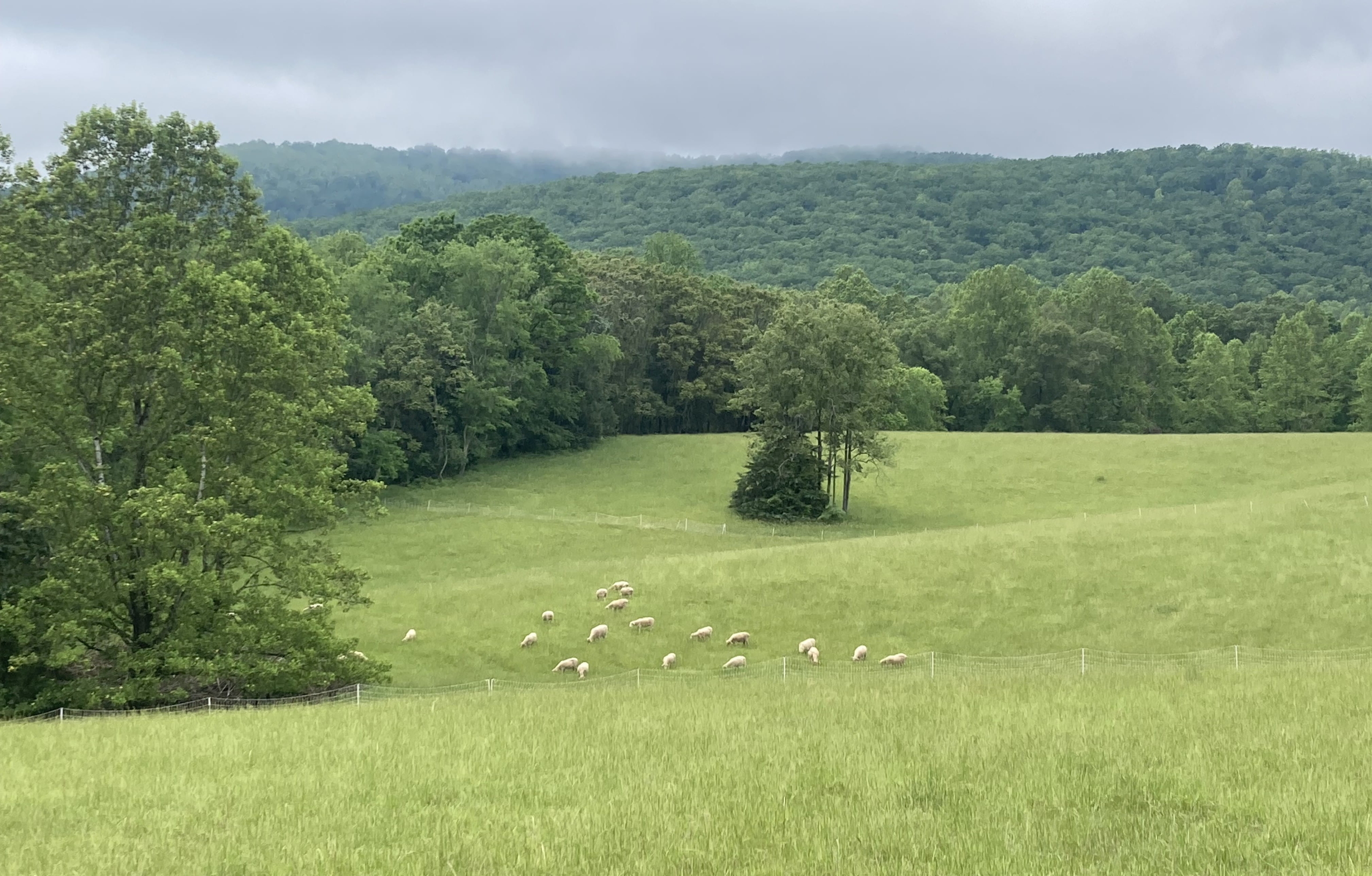
Many long-time Albemarle residents want to keep our county great.
Step three, convincing leaders to abandon the pursuit of growth, is the most difficult. Most current officials truly believe that, despite all evidence to the contrary, development projects will improve the county’s tax base and employment. Putting the brakes on overgrowth requires long-term vision and a willingness to reject empty promises of shared prosperity and political rewards from proponents of development. It also requires concerned citizens who can readily understand how the costs of growth outweigh its benefits.
Economist Milton Friedman suggested, “Only a crisis—actual or perceived—produces real change.” If we can cultivate a larger base of knowledgeable and vociferous local activists, we might be able to persuade decision-makers to abandon their infatuation with growth. Otherwise, we may have to wait for a crisis to alter our political landscape.
 Tom Olivier is an environmental activist and long-time resident of Albemarle County with a Ph.D. in anthropology from Duke University.






The long run solution to urban sprawl will be falling population. Imagine a world of cheaper housing and recovering ecosystems as cities contract. It’s happening already in Japan.
Falling population is not the antidote to expansion or urban sprawl. Not counting immigration, the US birthrate has been at or below replacement for years if not decades. The issue is the drive for centralization, driven by the financialization of everything. Democrats, who are largely cornucopians, look at people who are moving or trying to move from more rural to more urban environments and see a housing shortage that they feel duty-bound to satisfy by a build, baby, build policy. Oh, the poor Gen-Z families who can’t afford a house with a lawn of their own! It’s happening in my own community, reflected in the Comprehensive Plan, which totally ignored the converging ecological crises across our midst. You talk to local officials, and they tell you, “that has to be solved at higher levels of government,” with conviction in the set of their jaws, pity in their eyes. Cornucopians in the broad sense, of denial that there are material and energetic limits, yet paupers in regards to their own agency. Liberals and Conservatives are both in deep denial. Their denial just happens to manifest differently, but is equally dangerous.
They have a climate plan that calls for neutrality in 2050 (long after the current crop of politicians are gone). BFD. Lots of places have similar plans and they’re all mostly worthless. Sometimes a couple of nice baby steps, but all ignore limits to growth, resource depletion, peak everything, polycrisis, etc.
Meanwhile oil prices are up thanks to Donald and Bibi vs. the Ayatollahs, natural gas shipments are disrupted from the Gulf, NG based fertilizer is shut in the Gulf at the start of the planting season in the Northern Hemisphere. Seems likely these factors will have more to do with desired endless growth policies than proactive initiatives of any kind.
It would be interesting to see maps showing if this county protected lands despite economic status. In Montgomery County, Maryland, a lot of the land that was set aside for “preservation” also happened to be owned by wealthy people who didn’t want suburbs next to them. A similar dynamic has been operating in Northern Virginia, a bit west of John Foster Dulles airport. Gentrification is rarely mentioned in discussions of alleged sustainability.