On Public Lands, a Feeding Frenzy for Growth
by Kirsten Stade
American public lands management has always embodied a tense balancing act between conservation and exploitation. Too often the balance has tipped in an unsustainable direction. But the Trump Administration appears determined to break the scale, with unprecedented efforts to sell out public lands to extractive industries.
The Bureau of Land Management, Fish and Wildlife Service, National Park Service, and Forest Service together manage roughly 600 million acres of public lands. (BLM, USFWS, NPS, USFS, Public Domain)
Four agencies manage most federal lands. The Bureau of Land Management (BLM), the U.S. Fish and Wildlife Service (USFWS), and the National Park Service (NPS) within the Department of the Interior, and the U.S. Forest Service (USFS) within the Department of Agriculture, have varying degrees of conservation in their missions. But all share a basic mandate to manage for the benefit of wildlife, natural systems, and present and future generations.
This mandate enjoys enormous popularity, particularly in the Western states where most public lands are located. Majorities of both parties say they favor environmental protection over resource extraction on public lands, and want these lands to remain public. This has not stopped a succession of efforts to cash in on federal lands, and trade their vast potential for long-term public benefit for quick and dirty private profit.
The Fossil Fuel Feeding Frenzy
Cheered on by fossil fuel industry donors, the administration has been pursuing an unrelenting domestic energy growth agenda. The first order of business since inauguration has been removing habitat and wildlife protections. Or, in the words of Trump’s White House spokesperson at the time, “Liberating our federal lands and waters for oil, gas, coal, geothermal, and mineral leasing.”
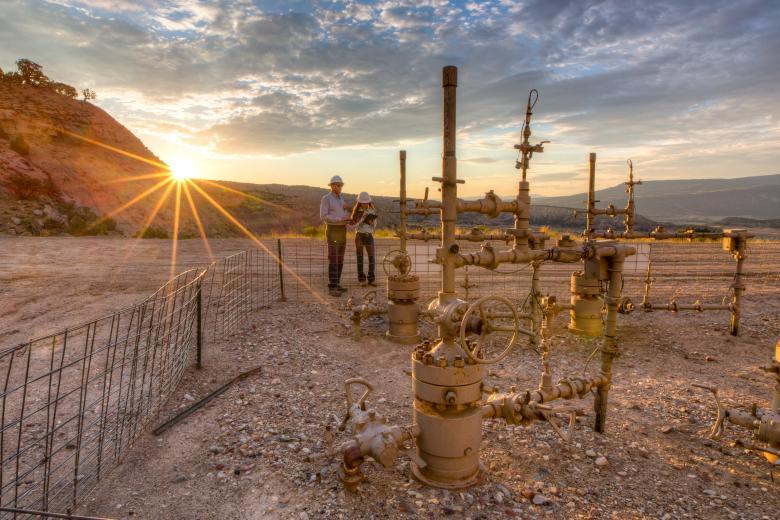
Oil and gas operations threaten vast public landscapes. (BLM, Public Domain)
This has included reversing protections for millions of acres of intact and sensitive ecosystems across Western states, like in Alaska’s iconic Arctic National Wildlife Refuge. It has included “emergency” oil and gas permitting procedures that evade endangered species protections. It has included a legal opinion that the president can abolish national monuments that protect natural and cultural treasures as well as clean water for millions of Americans.
It has included rolling back the 2001 Roadless Area Conservation Rule, pursuant to Trump’s executive order for expanded logging and the One Big Beautiful Bill’s mandate for 75 percent more timber production to offset tax cuts for the wealthy. Rescinding the Roadless Rule will pave the way, quite literally, for logging as well as coal, oil, and gas leasing on 58 million acres of Forest Service land. This includes treasures like some of the last remaining old growth coastal rainforest in the world, within Alaska’s Tongass National Forest.
The administration is wasting no time in taking advantage of these rollbacks. Already, it has announced oil and gas leases across 777,835 acres of BLM lands through June 2026. This will be just a portion of this year’s leases, but would already exceed those offered in any year since 2020.
Whether or not these leases are drilled anytime soon—which is unlikely given current oil markets—the existence of a lease precludes other uses of public lands, like for wildlife reintroduction or restoration.
Trashing Public Lands for “Green” Energy
Notwithstanding Trump’s notorious contempt for “green” energy, he is well disposed toward public land mining for its components. Trump has directed the Department of the Interior (DOI) to inventory federal-land mineral deposits and prioritize mineral production on lands where they are found.
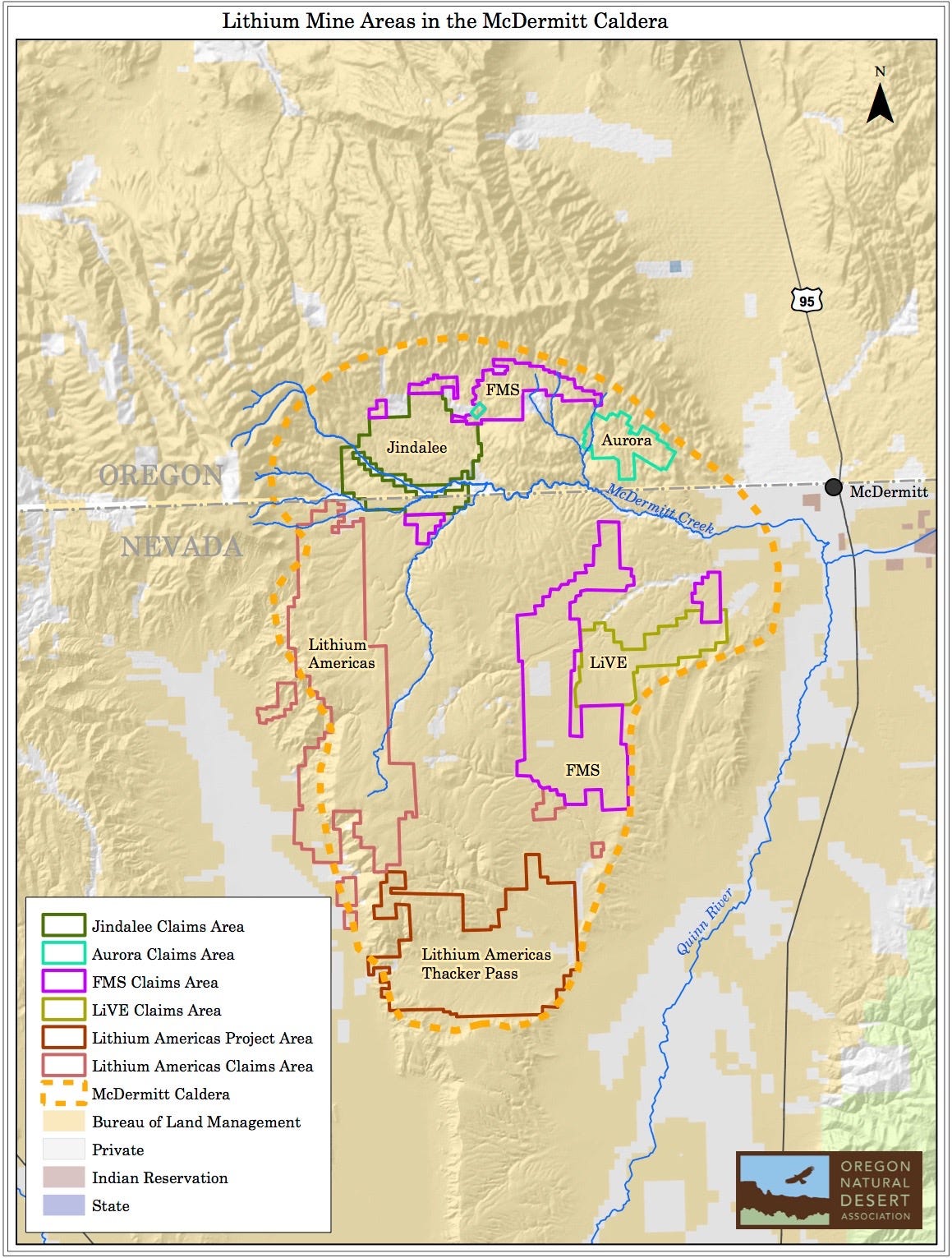
Lithium mine sites in the McDermitt Caldera of Oregon and Nevada. (ONDA)
He has also added mining projects to a Biden-era legislative process intended to speed environmental review for infrastructure projects. The Jindalee lithium mine in Southern Oregon is one such project. Jindalee in Oregon and Thacker Pass in Nevada, the world’s largest known deposit of lithium, are within some of the best, intact lower-elevation sagebrush habitats remaining for many species.
Much of the rest of sagebrush country is degraded, explains Katie Fite, Public Lands Director at WildLands Defense, in an interview for the Steady State Herald. Invasive cheatgrass often follows on the heels of grazing and mining in sagebrush. Once established in the understory, cheatgrass renders sagebrush more prone to wildfire and less hospitable to native wildlife.
Mining, and the tons of heavy equipment, road-building, and human activity attendant upon it, threatens almost 6,000 acres of sagebrush at Thacker Pass. It also threatens lands sacred to Paiute and Shoshone residents of the neighboring Fort McDermitt Indian Reservation.
In the United States, the vast majority of lithium and other minerals used in renewable technologies are located on or near Native American reservations. At Thacker Pass, Indigenous people have been at the center of protests against an open-pit mine that will devastate local plants, wildlife, air, and water.
Lithium is needed for the batteries in electric vehicles and to back up electrical grids powered by wind and solar. But its purpose cannot greenwash the extraordinary destruction of habitat for golden eagles, migratory birds, and the iconic sage grouse. The sage grouse has declined more than 90 percent across sagebrush ecosystems, but it has yet to be listed under the Endangered Species Act thanks to intensive lobbying by the livestock, oil and gas, and mining industries.
Equally concerning as habitat destruction in Nevada, the driest state in the nation, is water use. Lithium Americas, the company mining Thacker Pass, expects to pump 1.7 billion gallons of water per year. However, Fite said, “any estimate of how much water they’ll use is very often a gross underestimate.” That much water use draws down surface springs that are vital to wildlife across the Great Basin. Many of the springs in the vicinity of Thacker Pass have, noted Fite, already gone dry.
The importance of water in these operations is underscored by the recent revelation that a DOI official’s husband made $3.5 million selling water rights from a family ranch to Lithium Americas. The official, Karen Budd-Falen, made the deal contingent on the mine receiving its permits, which happened in the waning days of the first Trump Administration. Budd-Falen is now a high-ranking official in the second Trump Administration, which has acquired a 5 percent stake in both Thacker Pass and its parent company.
Ranchers Running Rampant on the Range
Long before she was a DOI official, Budd-Falen was a self-described “cowboy lawyer.” She no doubt played a key role in October’s announcement of a “USDA Plan To Fortify the American Beef Industry.” The plan is a gift to the livestock industry.
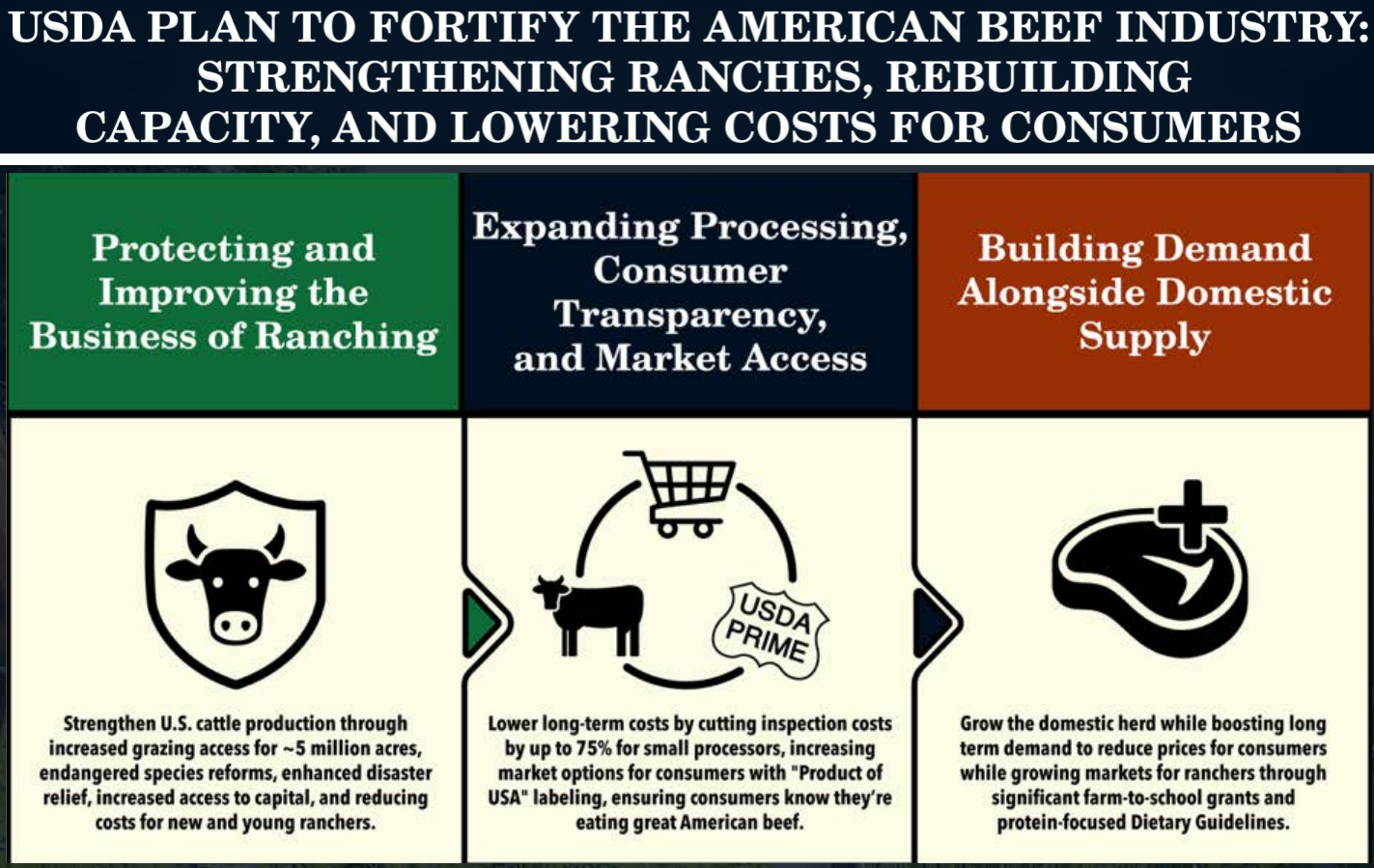
The “Plan to Fortify the American Beef Industry” says federal lands grazing supports billions in GDP, but doesn’t mention the billions in subsidies or the priceless resources lost. (USDA, Public Domain)
Across 240 million acres, the BLM and USFS permit livestock grazing for fees that are a fraction of those on private lands.
Although less visually striking than a strip mine or a clearcut, the ecological impacts of grazing are more devastating because they are so widespread. Cattle and sheep pollute sensitive waterways, exacerbate desertification, increase wildfire risk, and endanger native species throughout the West. These impacts continue unchecked, and often unmonitored by government agencies that are captured by the industries they are supposed to regulate.
The new plan calls for expanded grazing, including into areas formerly closed to protect sensitive vegetation and riparian areas for wildlife like grizzlies and bighorn sheep. It also expands rancher subsidies, for natural disasters or in case of predation, and promises to reduce that predation by killing more native wildlife.
The plan’s architects, and other livestock industry apologists, love to apotheosize public lands grazing as a pillar of rural economies. But the reality is that the benefits of grazing private livestock on public lands extend to very few. Two-thirds of BLM grazing is leased to just 10% of ranchers, who include permittees like The J.R. Simplot Co.
Simplot, which holds the largest BLM grazing lease, paid $2.4 million below market rate to graze 2 million acres of BLM and USFS lands in Oregon, Nevada, and Idaho last year. Similarly, the billionaire founder of Fox News, Rupert Murdoch, pays 95% below market rate to graze cattle on public lands near Yellowstone National Park.
Ecological Travesty, Economic Inanity
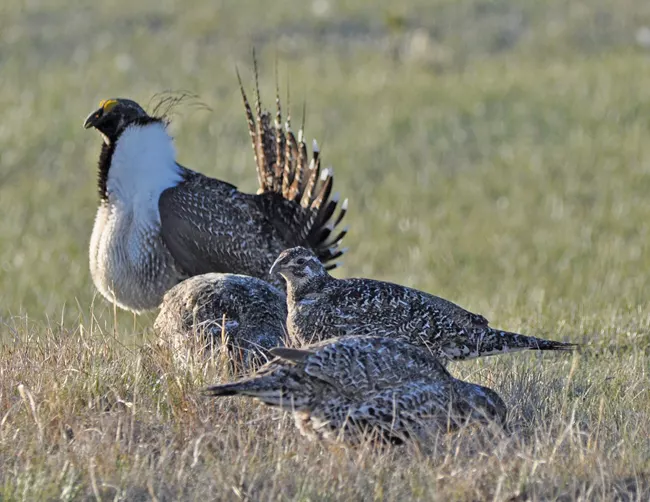
Greater sage grouse, imperiled by public lands extractivism. (USFWS / Jeannie Stafford, Public Domain)
All told, the costs of administering public lands livestock grazing amount to more than $500 million of loss to taxpayers. Similar economics of the bizarre characterize most public lands extraction. With an oil glut looming, investing millions to drill on public lands has little appeal for oil companies no matter how much Trump sweetens the deal. Meanwhile USFS timber sales are flagging, and a reopened coal lease on BLM land in Montana received just one bid, for pennies on the dollar.
Industry and its friends in the agencies defend these indefensible ventures for “the jobs and lucrative…service industry” they support. That our public lands riches can be so casually trashed to create make-work for dying industries reminds us of the late stage of our 200-year fossil-fueled growth experiment. In our hopeless addiction to cheap resources, getting the fix is its own reward. And there’s no getting this monkey off our backs as long as extraction-pushing ideologues are in charge.
Wolves Guarding the Public Hen House
Unfortunately the Trump Administration is a veritable cartel of true believers in liquidating nature to benefit industry. Karen Budd-Falen, who comes from a prominent ranching family and spent decades suing the government over grazing regulations, is just one example. Atop the DOI, which manages roughly one-fifth of the U.S. land area, sits Secretary Doug Burgum.
Near the start of his tenure, Burgum addressed extractive industry execs as “customers” and called public lands “America’s balance sheet.” Trump’s pick to head the BLM, Steve Pearce, is known for using his time as New Mexico Congressman to push for selling off public lands, shrinking national monuments, and expanding drilling and mining.
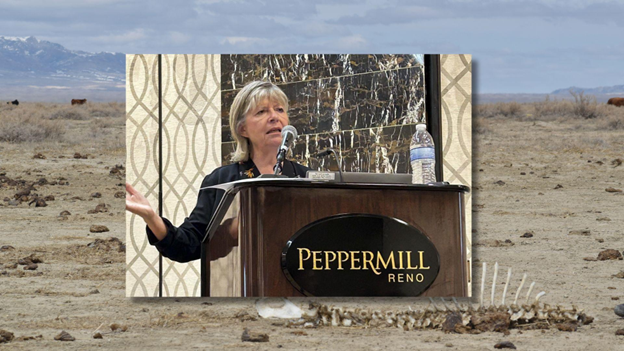
Former “cowboy lawyer” Karen Budd-Falen, Associate Deputy Secretary at the Department of the Interior (image of Budd-Falen by Ark. Agricultural Experiment Station, CC BY-SA 2.0; image of cattle destruction by Erik Molvar, WWP)
Such leadership only reinforces existing culture at the BLM. Nicknamed the “Bureau of Livestock and Mining,” the BLM has long catered to the demands of the livestock industry if only to avoid the meddling of the western congressmen who are at this industry’s beck and call.
In an interview with the Steady State Herald, Josh Osher, Public Policy Director with the Western Watersheds Project, said he worries not so much that this administration’s approach to public lands diverges wildly from the past. He worries about extractive industries becoming even more deeply entrenched in the agencies, so they are nearly impossible to dig out with a change of administration.
Few will be surprised that Trump is continuing the U.S. tradition of using public lands to promote the growth of industry. As Brian Czech recently described, Trump has geared the entire Administration and its policy choices to GDP growth.
It is stunningly ironic that a businessman known to admire artful deals would pursue so many bad ones. “It’s not profitable to raise beef on public lands,” says Osher. “But it is profitable when you get a million dollar check because it doesn’t rain. It’s never going to get better if we can’t change the incentives.”
As many extractive industries suffer from “Peak Everything,” political pressures will only mount to prop them up. Subsidies, tax breaks, and regulatory laxity on public lands may bring short-term economic growth to some rural towns, and definitely to a few CEOs and rancher hobbyists. But they come at great cost to the rest of us and the irreplaceable public lands we cherish.
 Kirsten Stade is a staff writer at CASSE.






Man there’s a lot to be depressed about on this topic. I am hoping, against hope, that a lot of potential projects won’t pass muster when corporations do the required ROI (return on investment) calculations before committing to anything.
I hope so too, Cole. There’s a good chance that a lot of these leases won’t see development in the near term, and in theory a future administration could buy them back. But that is certainly not the trend, and as touched on in the article, the existence of a lease precludes other uses that better serve conservation and the public good.
The US is caught, as are other nations, in a situation where advanced societies growth and development depended on extractive industries. If paying attention to the precious metals sector, we see silver undergo a squeeze. Industrial demand for battery production, tech industry, and solar panels are all dependent on this metal. For the metal to be useable in these applications, fossil fuels are needed to produce the highest temperatures thus far. How can entire societies be built, transitioned, and maintained, without these extractive industries? So would require a circular economy, although I’m not sure, and perhaps no one is, for how this can be manifest.
As I read, I was hoping to find a section titled, “Trashing Public Lands for Industrial Wreckreation,” a run down of how both political parties promote/subsidize the $1.2 Trillion industry and how the OIA co-opts enviro.orgs to never limit it’s growth.
Alas.