A Wave of Inflation from the Trophic Base
by Alix Underwood
The United States and Iran are engaged in peace talks, and the Strait of Hormuz is at the top of the agenda. Meanwhile, the United Nations maritime agency is promoting an alternative route through the Strait. Several tankers have already used the new route, despite threats from Iran, which relies on the Strait as its main source of leverage. Traffic is still far below pre-war levels, and stability in the Strait depends on Israel ceasing its attacks in Lebanon. That doesn’t look likely.
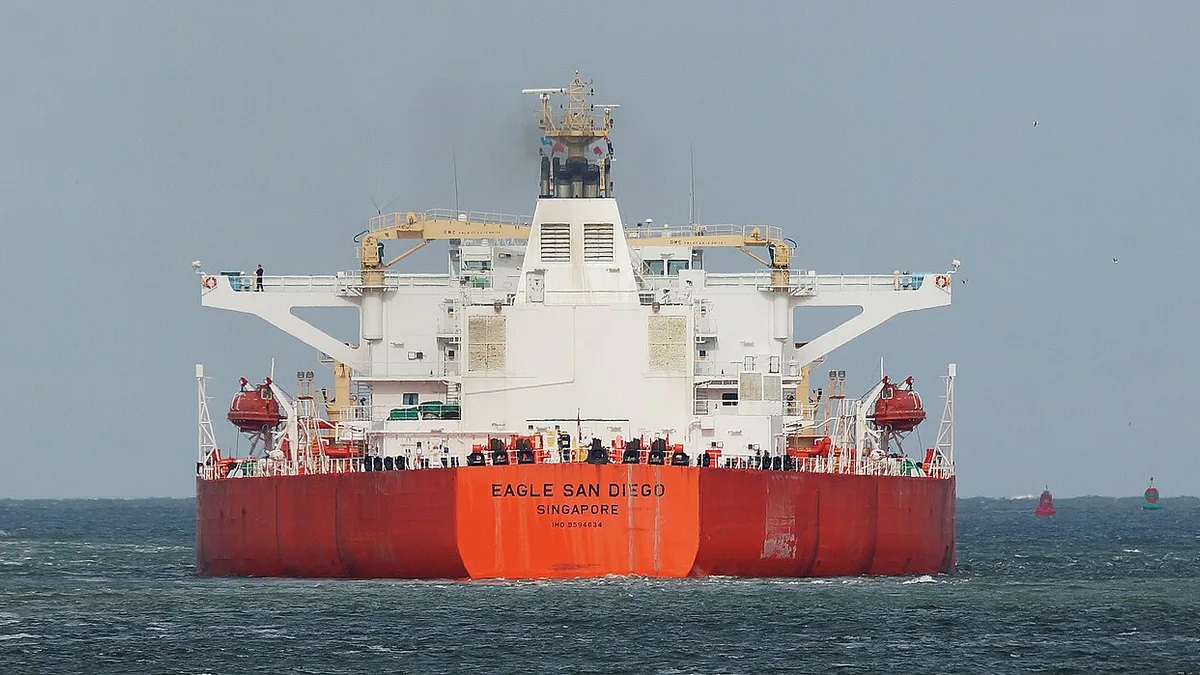
A crude oil tanker in the Strait of Hormuz. (Kees Torn, CC BY-SA 2.0)
There’s a reason the Strait of Hormuz is now a household name. Over 20 percent of the oil consumed globally comes through the Strait. Likewise, nearly 20 percent of liquified natural gas is shipped through the Strait, mostly from Qatar. Since the start of the conflict in late February, these flows have diminished to almost zero.
Consumers worldwide are feeling the squeeze at the gas pump. It’s easy to see how the supply shock is affecting the prices of other goods and services, as well. After all, fossil fuels are the core of the modern economy, used in every sector. Agriculture is no exception, and the agri-food sector has indeed been impacted by the fossil fuel shortage.
But fossil fuels aren’t the only goods stuck in the Strait that conventional agriculture relies on. The Middle East is a major producer of fertilizer ingredients, such as urea, sulfur, and phosphate. About a third of urea exports come from the region, and 3.9 million metric tons of them have been suspended since the start of the war. The region affected by the war produces around 45 percent of sulfur exports. Saudi Arabia alone produces 20 percent of the global phosphate supply.
Prices for most food products have remained stable thus far. However, as new planting cycles begin, high fertilizer prices will affect producers’ productivity and, therefore, profitability. If the Strait remains closed, it won’t be long before they pass these costs on to consumers. It’s a good time to ask ourselves what would happen if, instead of a temporary geopolitical crisis, it was ecological breakdown causing agricultural productivity to dip.
How High Is Inflation?
Inflation has accelerated globally over the last few months, and experts are blaming high energy and transportation costs. Before the start of the conflict, the Organization for Economic Cooperation and Development (OECD) predicted “all-items” inflation would be 2.8 percent in 2026. In March, they revised their forecast upward to 4.2 percent.
When asked by reporters whether he is concerned about inflation levels, U.S. President Trump said, “I love the inflation,” and that they’re “going to come down like a rock” when the war is over. (Gage Skidmore, CC BY-SA 2.0)
The OECD also revised their global GDP growth projections for 2026 from 3.4 to 2.8 percent. It’s not surprising that increased inflation and decreased growth are going hand in hand, as the money in the economy chases fewer goods than monetary authorities had expected. If the conflict is prolonged, the OECD predicts GDP growth will dip below one percent. This hasn’t happened since COVID and, before that, the 2008–2009 financial crisis.
Vegetable oil prices have spiked, largely because high oil prices have increased demand for biofuels, which have inputs in common with vegetable oil. Otherwise, food prices have stayed fairly constant. After all, the Middle East is not a big exporter of staple crops. And fertilizer shortages haven’t hit food prices yet.
However, the producer price index (PPI) serves as an early warning system for consumer price inflation, and right now, “the signals are flashing red.” The PPI is a measure of the prices producers receive for their outputs—from other producers or from retailers—as opposed to the prices consumers pay for final goods. Looked at from another angle, the PPI is an index of the prices producers face in their production activities. U.S. PPI stood at six percent year-over-year in April.
Experts are pointing the finger at the oil price shock and tariff pressures. However, the PPI for fertilizer inputs in the United States has increased by 17 percent since February. Likewise, the PPI for fertilizer manufacturing has increased by 14 percent. Just weeks after the start of the war, the global price of urea had doubled. Sulfur prices are well above historical averages, and already-high phosphate prices have also increased, though more moderately.
What would happen if the Strait of Hormuz was closed so long that producers and retailers could no longer absorb increased input costs, passing them on to consumers? Thinking bigger-picture and longer-term, what would happen if high food prices persisted due to ecological overshoot? Let’s approach this question through the lens of the trophic theory of money.
Mouths Fed Per Farmer
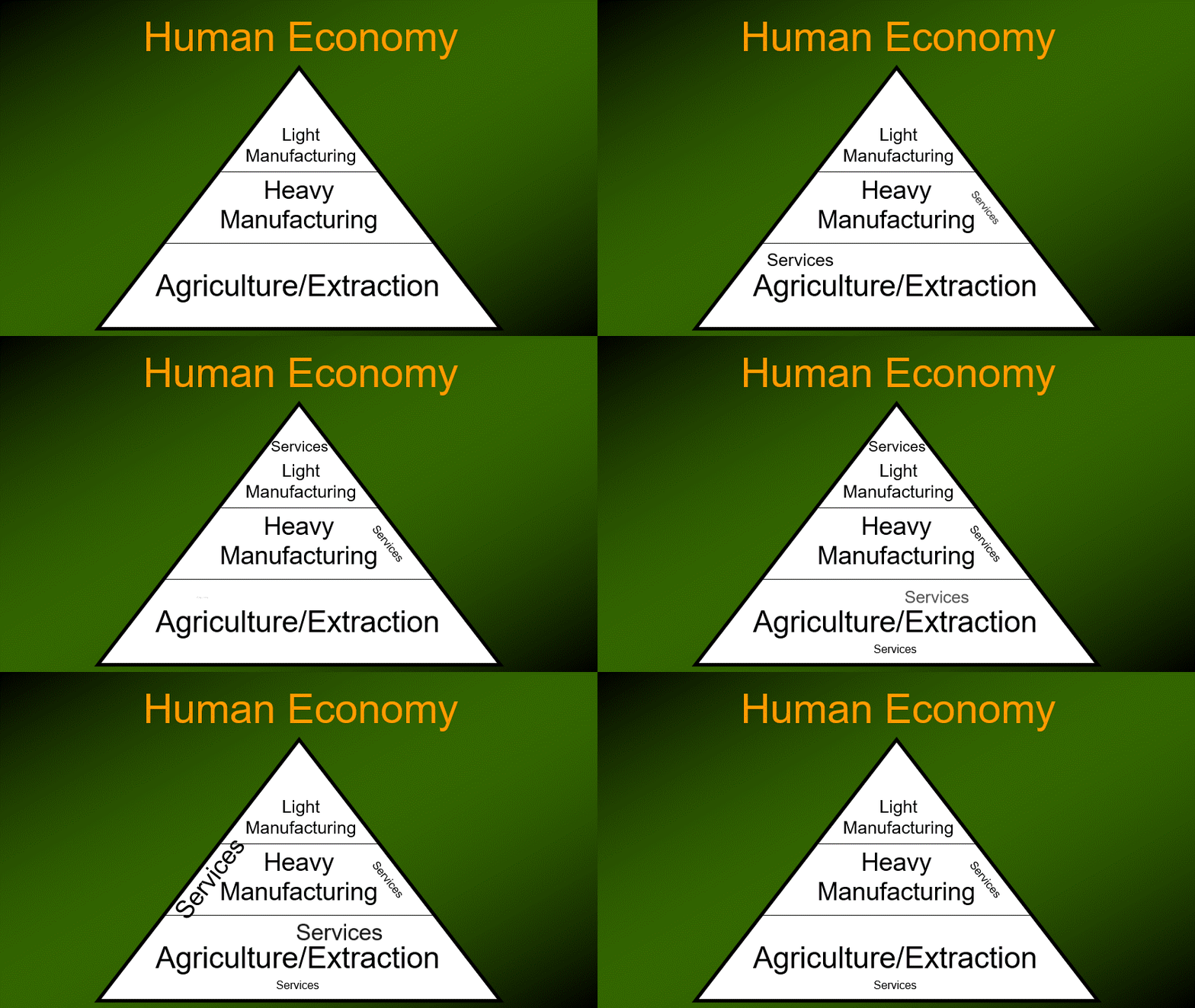
The economy is embedded in and depends upon Earth’s ecosystems and, like those ecosystems, has a “trophic” structure.
Long-time steady staters will be familiar with the trophic structure of the economy. Like primary producers (plants) in ecosystems, agriculture and extractive sectors make up the “trophic base” of the economy. Materials and energy flow from this base to heavy manufacturing, then light manufacturing, forming a trophic pyramid. Services are provided at every step; perhaps “gervices” is more apt, as all services are married to goods in their production and consumption.
Just looking at the numbers, it’s easy to lose sight of the economic importance of food. Nobel-prize-winning economist William Nordhaus said, “Agriculture, the part of the economy that is sensitive to climate change, accounts for just three percent of national output. That means that there is no way to get a very large effect on the U.S. economy” (Science, September 14, 1991, p. 1206). Our machines may not run on food, but we do. If you couldn’t use money to buy food, you would quickly lose interest in your job.
That’s the essence of the trophic theory of money: We use money because there is agricultural “surplus,” in the sense that farmers grow more than enough to feed themselves. One corollary of this theory is that the “warranted” money supply reflects the number of mouths fed per farmer. This relationship may not be linear, given that value is added to producer goods and services further up the trophic pyramid, until the prices of final goods and services are reached. But it’s undeniable that the relationship exists.
If increases in mouths fed per farmer enable economic growth (and corresponding growth in the warranted money supply), what happens when the number of mouths fed per farmer decreases? Barring temporary blips in the late 1980s and during COVID, food supply per farmer per day hasn’t decreased since global data became available in 1961.
We’re gearing up for another blip, as fertilizer shortages threaten to decrease the number of mouths fed per farmer. Countries outside the Middle East are stepping up to fill the void. China lifted export restrictions on urea, and the United States and European Union have taken steps to increase fertilizer production.
This may soften the blow of the current geopolitical crisis, but it will only hasten the long-term ecological one. We should be prepared for a scenario where climate change, freshwater shortages, and degraded soils render useless our best efforts at maintaining current levels of agricultural productivity. In that scenario, what would happen to the rest of the economy?
Pushed to Grow Food
Like fossil fuels, agricultural outputs can serve as direct inputs for other sectors. Globally, an estimated 12 percent of cropland production goes to non-food uses, which include biofuels and textiles. In the United States, 31 percent of the corn grown is used for biofuel.
But let’s focus on the majority of agricultural outputs, which are used as food, either standalone or as ingredients. The trophic theory of money implies that, if farmers can’t feed as many people, more people will become farmers, while the warranted money supply decreases. But the “nominal” money supply remains, at least for some time, so inflation ensues, as the nominal money supply is no longer warranted.
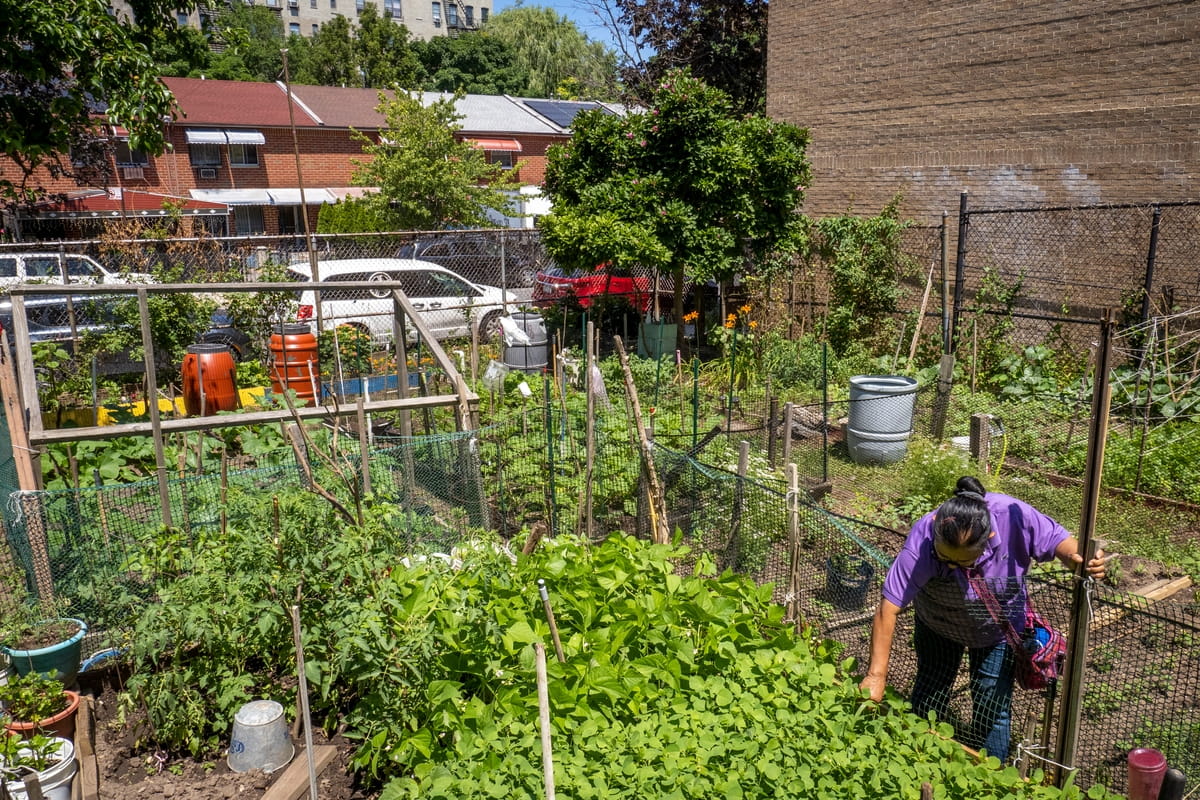
A community garden in the Bronx in New York City. (Flickr, Public Domain)
Especially in high-income countries and in cities, you might expect inflation to drive people to cut back on non-essential consumption. It would also reinforce the push toward homegrown food production, even in urban settings. A recent survey found that 87 percent of Americans are planning food-growing projects in 2026. Of those food growers, 61 percent listed rising grocery prices as their top motivator.
In many low-income countries, subsistence farming provides a safety net when food prices go high. Unfortunately, this method for coping with high prices isn’t as effective as it could be. That’s because smallholder farmers—the majority of whom are “net food buyers”—often don’t own enough land to increase production, much less to surplus levels.
Pulled to Grow Food
In an interview for the Herald, Rob Vos, senior research fellow at the International Food Policy Research Institute, said, “If prices go up or farmers expect higher prices, then—if they can—they’ll try to produce more of those commodities. Sometimes, it’s a substitution effect, from one crop to another. But generally, we see that if there’s a chance to produce more and sell more in the markets, farmers will try to do that. And if needed, they’ll also increase the amount for labor, which will push up wages.”
However, Vos emphasized food-price increases must be significant for demand for agricultural labor—and subsequently, wages—to rise substantially. What’s more, output prices (what farmers receive) must rise at least commensurate with input prices (what farmers pay) to incentivize farmers to grow more food.
Let’s again apply a trophic lens to a scenario where supply shocks cause the economy to shrink. Because this would decrease the warranted money supply, it seems unlikely that anyone’s real wages—adjusted for inflation—would increase. However, we might expect wages in the more vital sectors at the economy’s trophic base, if not to increase, to decrease less than in other sectors. In other words, we might see wage redistribution toward the sectors most necessary for our well-being.
In the case of sharp fertilizer-price increases, Vos says farmers may feel more pressed to improve their fertilizer-use efficiency than to hire more labor. Fertilizer application is not always optimal. “When fertilizers are cheap, there will be farmers who buy more than they need and waste it or use too much of it. For these farmers, there’s quite a bit of space to reduce costs.”
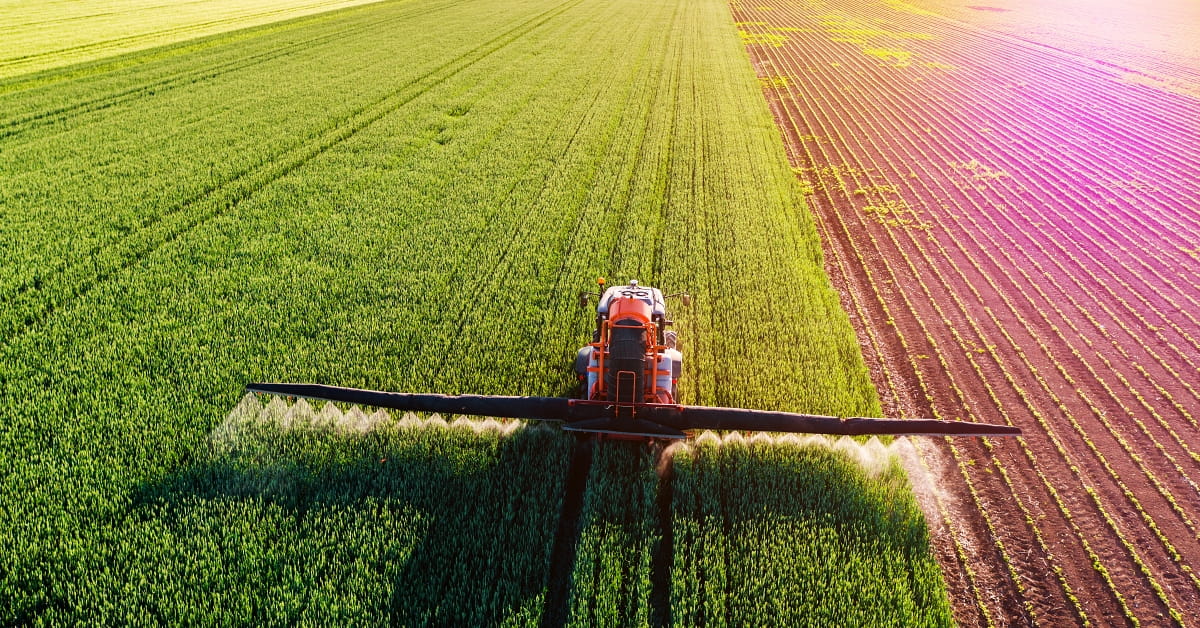
Industrial, or conventional, agriculture typically requires more inputs, such as fertilizer, and less labor than other farming techniques. (Elevate Legal Services, CC BY-NC 4.0)
But according to Vos, most modern farmers already use fertilizer efficiently, at least in terms of maximizing short-term yields. To reduce their fertilizer inputs, “These farmers need to adapt their practices and technologies, and that doesn’t happen overnight. They could consider switching to biological forms of fertilizer, like manure, but in many contexts, that’s not as productive as chemical use. So, they’d lose productivity unless they’re able to combine use of biofertilizer with improved farming practices.” In other words, chemical fertilizer prices would have to rise steeply and stay high before farmers are likely to switch to alternative fertilizers and practices such as regenerative farming.
This brings us back to labor, because—though Vos pointed out this isn’t always the case—the consensus is that organic and regenerative farming require more labor than “conventional” agriculture.
“Development” in Reverse
Most people would consider the movement of labor to the agricultural sector to be “development” in reverse. When presented with the trophic theory of money (TTOM), Rob Vos compared it to structural change theory, the dominant development theory in the ‘60s and ‘70s. The idea is that for an agricultural economy to transition to an industrial economy—assumed to be desirable—agricultural productivity increases are necessary. “People have known that, probably for centuries or millennia. For ancient societies to build temples and churches, they needed a lot of surplus labor that wasn’t working in agriculture. Agriculture needed to be productive enough to feed all that surplus labor.”

Is fewer farmers always and everywhere a worthy goal? (Narek75, CC BY-SA 4.0)
What sets TTOM apart is that it provides a conceptual model for describing the conflict between economic growth and environmental protection in monetary as well as physical terms. It helps us demonstrate that the growing flow of GDP fundamentally requires an expanding trophic base and a growing ecological footprint. It places the economy firmly within the context of planetary boundaries, pointing to the limits of structural change.
It also helps us understand why agricultural productivity growth is plateauing. The ecological crises that will eventually cause it to reverse are driven in part by the very practices that enabled explosive productivity gains in the short term.
Will we wait for this to play out extensively, forcing the economy to contract with devastating social consequences? Or will we intentionally transition to a steady state economy, via degrowth in some regions, building a new agri-food system fit for people and planet in the long run? Maybe the new system will require more labor, and maybe we can harness that for improved well-being. The Strait of Hormuz closure, despite the devastation it has caused, is an opportunity to go back to the agricultural drawing board to catalyze sustainable change.
 Alix Underwood is managing editor at CASSE.


Alas, sobering reading indeed. I fear too that with pressure to produce more food, a lot of societies will look at “the commons”, i.e. the oceans, to squeeze more calories out of the planet. Aside from ocean ecosystem collapse, I would expect this to give rise to yet another source of human conflict. I.e. you chased my fishing fleet out of this area, well OK, here we come again with warship escorts, etc.
I am interested in how critics of any suggestion that 8 billion humans is too many (let alone 9 or 10 billion) poo-pooed the idea that, sometime in the future, it would become difficult to feed so many people.
The assumption was that we will always have fertiliser. And since the “green revolution” we have been able to produce excesses.
This all seems to be shown up to be over-optimistic, with this sudden and unexpected reduction in the amount fertiliser available.
Humanity cannot be fed, at its current standard, without fertilisers. That now needs to be acknowledged.
And as you say, with problems of water supply, decline in biodiversity, and degraded soils – as well as climate change causing high temperatures, droughts and floods, it seems that food supply for 9 billion people, in say 25 years, will be a REAL problem And that is an understatement.