Eliminating Public Comments: Another Bow to GDP
by Kirsten Stade
The public’s ability to weigh in on vital matters impacting human health, safety, and our ecological footprint is under grave threat. As part of its aggressive campaign of deregulation, the Trump Administration has been eliminating the opportunity for public comment on rules made by federal agencies.
In the early months of 2025, the Trump Administration issued a series of Executive Orders that declared economic growth a priority. These orders directed agencies to repeal regulations deemed to stand in the way of that growth. An Executive Order from February 2025, for example, “Ensuring Lawful Governance and Implementing the President’s ‘Department of Government Efficiency’ Deregulatory Initiative” directed agency heads to identify for elimination:
Trump has directed agencies to repeal regulations that protected human and ecological health. (The White House)
…regulations that harm the national interest by…impeding technological innovation, infrastructure development, disaster response, inflation reduction, research and development, economic development, energy production, land use, and foreign policy objectives.
A memo issued in the aftermath of these Executive Orders specified that these repeals should proceed without public notice or comment.
Clearly, the Administration understands the power of public comments to provide a check on regulated industries. This is particularly vital as the agencies that do the regulating are increasingly captured by those very industries.
The Power of Public Comments
Public comments on proposed policy have shaped the most monumental environmental and public interest victories in the United States. Strengthened public lands protections, toxic chemical regulations, labor laws, and air quality standards all emerged from robust processes for public input.
Agencies make rules that interpret and implement laws passed by Congress. Under the Administrative Procedures Act (APA) of 1946, agencies must notify the public of proposed rules and rule changes. They also must solicit public comment, and consider and respond to all comments that are relevant and substantive. Although the APA does not specify a minimum length for comment periods, most are 30-60 days.
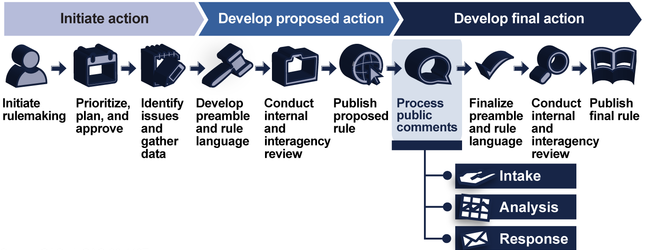
Public commenting is baked into agencies’ rulemaking processes under the Administrative Procedures Act. (Government Accountability Office)
The National Environmental Policy Act (NEPA) provides another avenue for public comment on the environmental, social, and economic consequences of proposed federal projects. The 1969 statute directed federal agencies to adopt agency-specific regulations spelling out how they would implement it.
Most public commenting occurs through Regulations.gov, a portal linked to Federal Register announcements of new projects, rules, and changes. Agencies may also hold meetings, hearings, and town halls to allow the public to weigh in on proposed policy.
Examples and Limitations
Some of the most consequential environmental and public health proposals have attracted hundreds of thousands of public comments. The 2024 National Ambient Air Quality Standards (NAAQS) update was significantly stronger than the previous standard for air pollution. The update was informed by nearly 700,000 public comments and advice from the Clean Air Scientific Advisory Committee—an influential committee that Trump has just reconstituted with industry representatives in place of academics. The tighter air pollution limit could prevent up to 4,500 premature deaths and 800,000 cases of asthma annually.
That is, if it is allowed to stand. Industry groups, concerned the new limit will constrain construction and manufacturing, have sued to revert to the old standard. Trump’s Environmental Protection Agency (EPA) has moved to do just that.
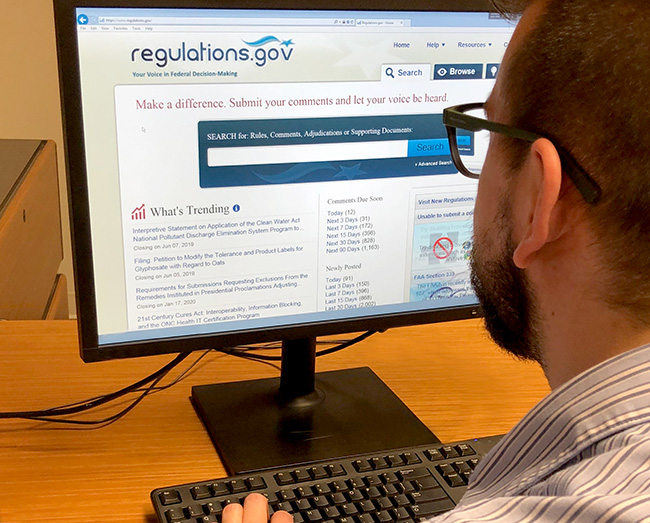
In recognition of the vital role of public comments in shaping policy, agencies have until now made commenting relatively straightforward and accessible to all. (Government Accountability Office)
Even the masses of nearly-identical public comments that result from organizational campaigns have had an impact on key regulations. The 2015 EPA rulemaking that expanded Clean Water Act protections was shaped by such campaigns. So was the 2015 Federal Communications Commission ruling on net neutrality. Both of these rulings are now on Trump’s deregulatory chopping block.
Of course, many regulations end up largely unchanged from their proposed form despite substantial public involvement. And industry input is undoubtedly weighed more heavily than input from the public, scientists, or other experts. Industry and interest groups often have the opportunity to meet with agency officials and influence rulemaking before the public is even aware a rule change is under consideration. And administrations, especially the present one, rarely publicize opportunities for comment.
Rolling Back Public Input on the Road to Deregulation
The Trump Administration is taking the undermining of public input to a whole new level. Last summer, the administration removed a tool from Regulations.gov that made it easier for advocacy groups to collect and submit public comments. Citizens and groups are left to navigate a complicated and inconsistent system—when they can comment at all.
And in many cases, they cannot. In its first six months in office, the administration issued roughly 600 final rules among six science agencies. Most were rules to roll back or eliminate regulations protecting public health and safety. For almost a third of these, there was no public notice or comment.
To justify these flagrant violations of the APA, the Administration is exploiting a loophole known as the “good cause” exception. The APA specifies that an agency may forego public notice and comment when it for “good cause” finds that providing public comment opportunity is “impracticable, unnecessary, or contrary to the public interest.” Historically, the exception has been used rarely; primarily for emergencies.
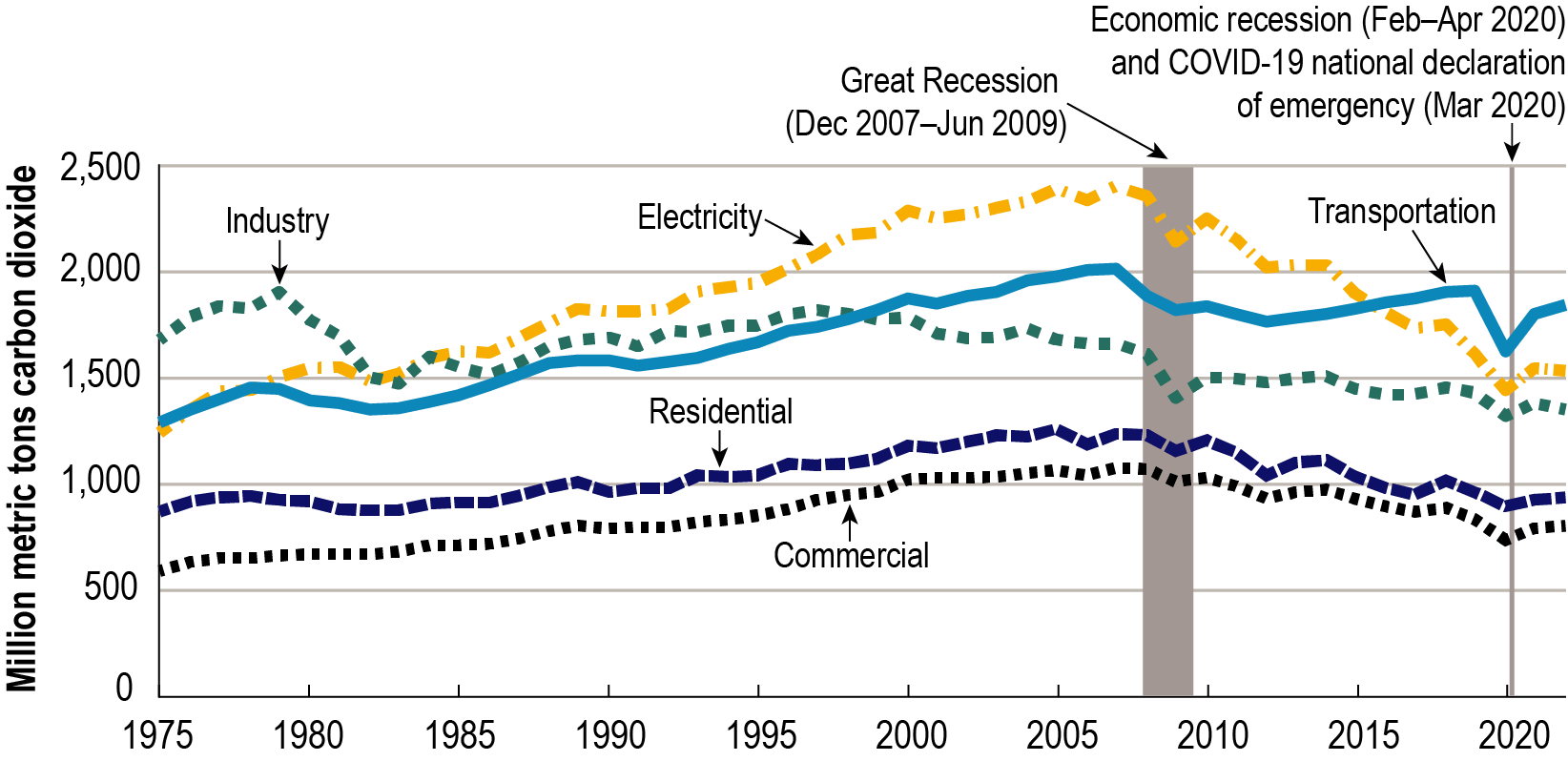
Trump’s Department of Transportation has eliminated the rule that allowed states to track greenhouse gas emissions from transportation. (Bureau of Transportation Statistics)
The argument that this exception applies to the repeal of regulations agencies deem “unlawful” will not likely hold up in court. But in the meantime, changes made with no public input are having real impacts on public health and the environment. Many of these impacts will be irreversible, regardless of how (or if) courts rule.
Examples abound. Three months into Trump’s second term, the Department of Transportation eliminated a 2023 rule with major implications for climate change. The rule required states to monitor vehicular greenhouse gas emissions on major roads, and was shaped by 40,000 comments. It was repealed under the good cause exception, with no public notice or opportunity for comment.
Gutting NEPA
Perhaps most alarmingly, early last year the White House Council on Environmental Quality (CEQ) issued an interim final rule to rescind agency regulations implementing NEPA.
The interim final rule is itself a mechanism that undermines the purpose of public comments to inform rulemaking. It allows comments on rules that have already been published, as opposed to proposed rules designed for significant public discourse. An interim final rule may or may not be altered in response to comments; the mere notation as “final” (interim or not) makes alteration less likely.
In the case of NEPA, the CEQ’s February 2025 rule generated more than 108,000 comments that have not been addressed. It triggered numerous agencies to rescind their own NEPA regulations, in interim final rules that themselves generated an additional 164,000 public comments. But the rules are now in effect, the comments unaddressed.
As a result, agencies are proceeding full-speed ahead on actions with serious environmental and public health implications. The U.S. Department of Agriculture (USDA), for example, implemented a rule last July that excludes public involvement from most national forest projects. This includes logging, mining, road building, grazing, and the killing of wildlife (coyotes, for example) by the cynically-named Wildlife Services program. It also includes USDA responses to disease outbreaks in factory farms.
The Department of Energy is proceeding to build nuclear reactors using new technologies, with no notification or comment opportunity for the communities that will be forced to host them.
The Department of the Interior has invoked President Trump’s “energy emergency” in its “alternative arrangements” for NEPA implementation. These prescribe that environmental assessments for public land energy projects be completed in 14 days, with no required public comment.

Public comments overwhelmingly favored the creation of a buffer zone around the sensitive ecosystem, wildlife, and cultural resources of Chaco Culture National Historical Park. (National Park Service)
The Bureau of Land Management (BLM) within Interior recently announced plans to open lands surrounding Chaco Canyon to oil and gas drilling. The 1,100-year-old historical site in New Mexico is surrounded by a 330,000-acre buffer zone. This is the product of years of advocacy by tribes to whom the site is sacred. BLM allowed only seven days for public comment on the proposal, a time period that nonetheless yielded 70,000 comments.
While the administration has just finalized its rule rescinding NEPA regulations, the agency rollbacks already in place are being challenged in court.
This is good news, according to Darya Minovi, Fair Access Research Manager for the Center for Science and Democracy at the Union of Concerned Scientists. In an interview for the Herald, Minovi pointed out that Trump lost most cases related to the APA in his first term.
Public Comments’ Hidden Superpowers
Which leads us to another key value of public commenting: Comments can bolster legal challenges to agency rules. Although industry undoubtedly has the upper hand when it comes to shaping these rules, public comments play a role beyond their APA-mandated consideration in rulemaking. “Every time I submit a public comment,” said Minovi, “I think of how it could be used in a court case down the line.”
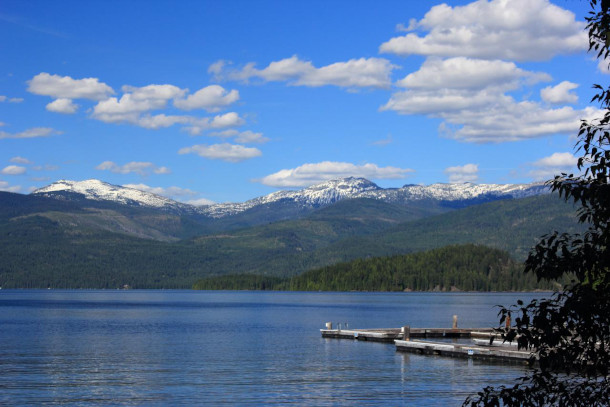
The 2015 EPA ruling on the definition of “Waters of the United States” was informed by thousands of public comments. It extended Clean Water Act protections to 60% of the nation’s waterways. (Tim Lumley, CC BY-NC-ND 2.0)
Indeed, public comments are vital tools for educating the courts, legislators, agency staff, and the public at large. Public comments become part of the public record, and part of the reservoir of ideas available to shape a more livable future.
This is true even for ideas that are too far ahead of their time for most policymakers of today. And it is true for public comments at state, county, and local levels. For example, a county comprehensive plan is an opportunity for educating county leadership and the public about the merits and mechanisms of a steady state economy for environmental protection and economic sustainability.
The administration’s attack on public commenting represents no small threat to democracy, human rights and health, and environmental protection. It also underscores a hopeful reality: that the public prioritizes these values over the growth that imperils them. This reality should inspire us to use our right to public comment wherever we still can, and to fight back vociferously against its erosion.
 Kirsten Stade is a staff writer at CASSE.





Eliminating public comments is a sad development, for two reasons in my humble opinion:
1) It seems an awful lot like a symptom of extreme emotional fragility about criticism of any kind. ‘Nuff said
2) More practically, in areas like economic policy, where agents (humans) number in the hundreds of millions, it is impossible for any policy makers to understand all motivations and bits of knowledge that all the agents have. Public comment is a messy business, but it allows policy makers to have epiphanies like “oh wow, who knew that so many people depend on activity XYZ to making a living?” or “oh wow, who knew that so many people would love to see more of B than A, contrary to what we thought?”
The main reason for public comments under NEPA is to lay out the basis for a lawsuit. It is r are that quality comments, by themselves, get an agency to improve a proposal. It’s usually the “Court of Public Opinion” that results in that. NEPA is focused on disclosure of damage, not reduction. If one wanted to destroy all life on Earth, one would merely have to show that a range of alternatives were considered and disclose the impact of the preferred alternative selected by an agency. This isn’t hyperbole – there are Environmental Impact Statements prepared on nuclear weapons production factories.
My favorite federal law is Section 4(f) of the 1966 Transportation Act, which prohibits federal aid highways from being built through parks. It requires avoidance of damage, not merely disclosure. I helped use the existence of this law to persuade Federal Highway Administration to cancel plans for the “West Eugene Porkway” in Oregon in 2007. Clean Water, Endangered Species and several other acts were involved but tangential, and their requirements are much less strict than 4(f).
NEPA’s limitations mean it should be strengthened to require avoidance of damage, but most of the environmental movement is just trying to keep it from being further destroyed.
“In a democracy the public comment period never ends.”
Thanks, Kirsten, for an incisive look at an alarming problem. Indeed, when you combine the anti-democratic effect of this thinly veiled attack on public input (and, as Cole Thompson notes, above, on vital information, too) with the Trump DoJ attack on the Presidential Records Act, the whole picture is quite Orwellian. Trump did learn well from his friends in the Nixon administration, who sought similar restrictions, but, at that time, there were two other functional branches of government most often ready and willing to stand in the way. The situation today is much more problematic, and the significance of democratic participation (in public commentary and electoral activity) all the more vital. This important article is a clarion call for activism and resistance.
Hello,
some of the University of Alaska professors have just made a public statement re the recent elimination of the
Equity, Inclusion and Diversity EID program and as supported by the Board of Regions (BOR).
It’s a worthwhile read on such topics and addresses Freedom of Speech/Expression, the constitution and the modern
academic landscape we currently experience nation-wide, if not wider.
Details about this letter can be found here
https://alaskabeacon.com/2026/04/18/ua-professors-oppose-banned-words-and-defend-free-speech-and-cultural-diversity/
Thanks, Falk Huettmann