Chemical Safety Sacrificed on the Road to GDP
by Kirsten Stade
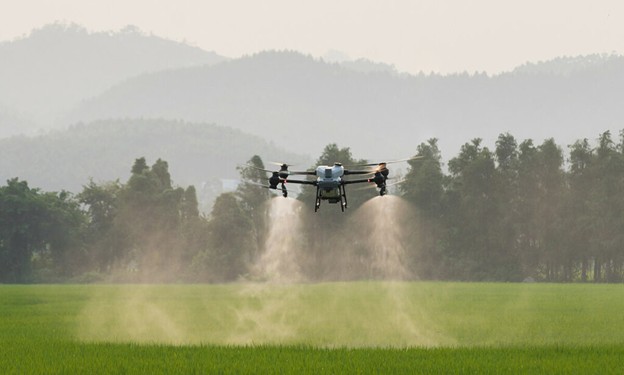
Trump’s rollback of environmental regulations opens the floodgates for agricultural chemicals. (Precision Drone LLC, CC BY-NC 4.0)
Trump’s second-term regulatory rollbacks have already undone decades of progress in protecting public health and the environment. Not surprisingly, the safety of agricultural chemicals is among the casualties of this deregulatory fervor.
The president’s single-minded pursuit of GDP growth has meant ordering the production of more herbicides. It has meant intervening to protect their manufacturers from lawsuits, when those downwind get cancer or lose their crops. It has meant stacking his administration with former chemical industry lobbyists. And it has meant dismantling regulations that were the result of years of painstaking risk analysis.
A few recent examples are alarming in the risk they pose to human health and environmental protection.
Glyphosate: Ramping Up Production of a Probable Carcinogen
In February, the president issued an executive order directing increased production of phosphorus for two purposes. One was for its use in manufacturing war technologies. The other is its use in the herbicide glyphosate.
Glyphosate was developed in the early 1970s by Monsanto, which brought it to market under the brand name Roundup. Its widespread adoption triggered the development of “Roundup Ready” soybean, cotton, corn, and other crops, which have been genetically modified (GM) to withstand the weed killer. By 2006, more than 95 percent of all U.S. soybeans, and almost 70 percent of cotton, were glyphosate-resistant. Since glyphosate could now be sprayed over the top of plants with no damage to crops, it quickly became the most widely used herbicide in the world.
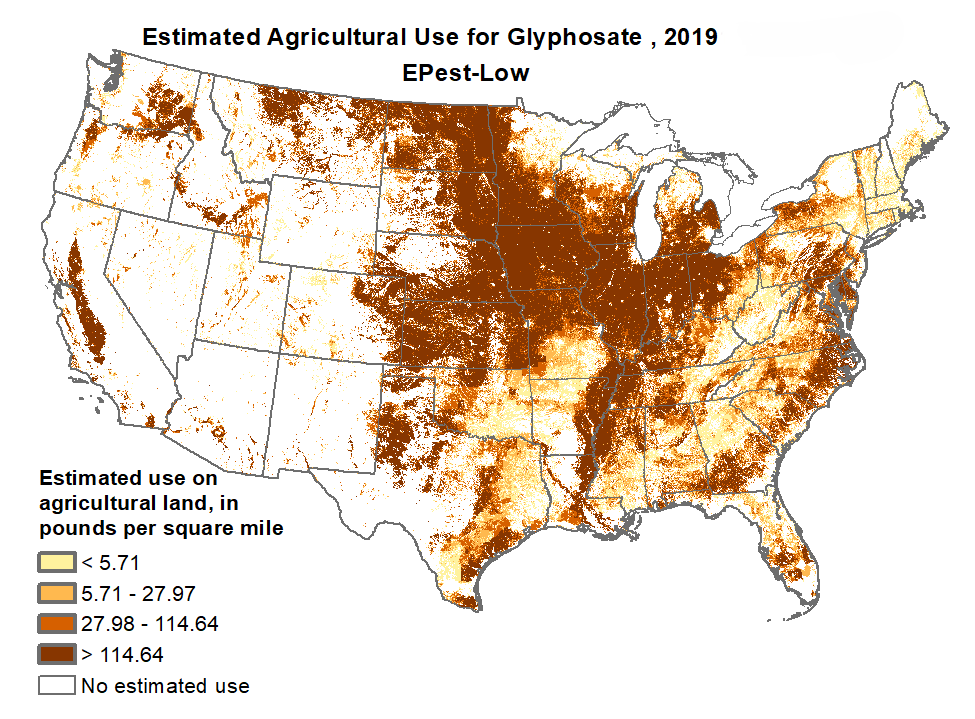
Glyphosate is the most widely used herbicide in the world, particularly across soybean, corn, and cotton crops in the U.S. Midwest and South. (USGS)
A 2026 analysis by Food & Water Watch found high rates of non-Hodgkin lymphoma in counties where glyphosate is widely used. In 2015, the World Health Organization listed glyphosate as a probable human carcinogen. The EPA does not, although it does admit glyphosate likely harms bees, birds, mammals and of course nontarget plants.
Bayer, which acquired Monsanto in 2018, has already paid out $11 billion in claims to those who say they got cancer and other diseases from glyphosate exposure. But the Trump administration is intervening on Bayer’s behalf in a case currently before the Supreme Court, a case that would protect the multinational from lawsuits over its failure to warn consumers of cancer risk.
Glyphosate’s risks are well-known, and are generating an outcry among the Make America Healthy Again (MAHA) contingent of the president’s base. MAHA activists, many of them rural, enthusiastically embraced Health and Human Services Secretary Robert F. Kennedy Jr.’s pledge to reduce chemical contamination of the environment and food supply.
Yet the chemical’s near-ubiquity in much of the U.S. farm belt makes bucking the trend nearly impossible. Even farmers who wish to do so must buy the genetically modified seeds, or risk obliteration of their crops from herbicide drifting from neighboring farms.
But the biggest reason for glyphosate’s continued popularity, and for its boosters in the current administration, is economics. Several reports, most commissioned by the industry, have documented that glyphosate use has meant billions of dollars worth of agricultural productivity gains.
These gains, however, are concentrated in the first few years of use. After that, weeds evolve resistance to glyphosate and farmers must apply additional chemicals to kill off survivors.
Dicamba: New Approval Discounts Drift Damage
Their first choice is often dicamba. Though in use for decades since its first American agricultural application in 1967, dicamba use has only recently taken off. Dicamba’s volatility and tendency to drift made it less popular until recently, as glyphosate’s declining efficacy has forced farmers to use both.
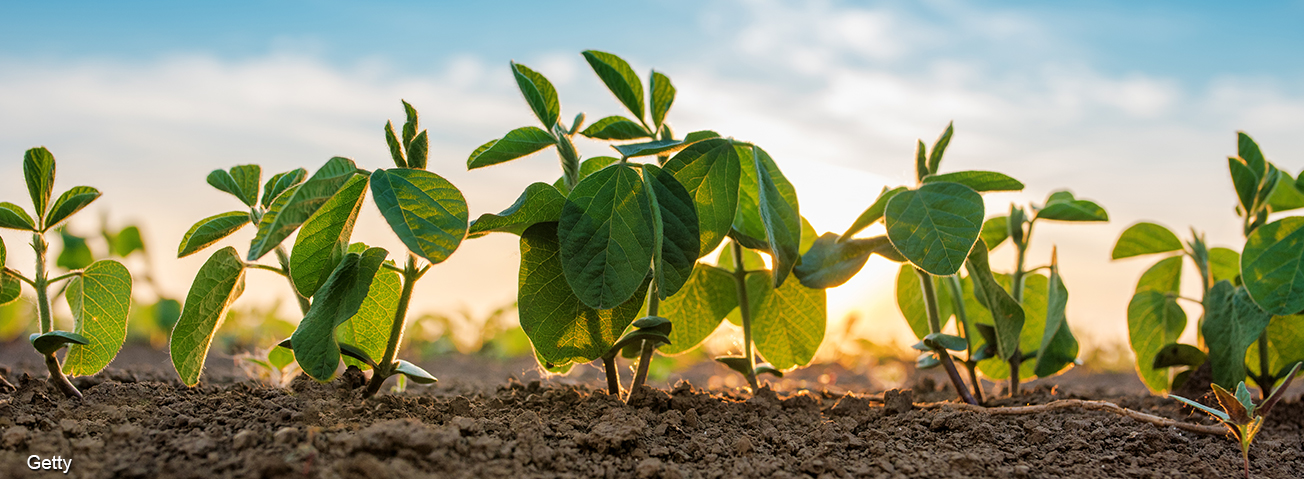
Herbicide-resistant soybeans are part of a vicious cycle of ever-increasing herbicide use and genetically-modified seeds. (USDA)
Monsanto began selling dicamba-resistant seeds in 2015, and less-volatile formulations of the chemical in 2017. These developments did not prevent a record number of complaints in 2017 of crop damage from dicamba drifting onto fields sown with non-GM seed. Drifting dicamba has damaged millions of acres of crops, orchards, and native vegetation especially throughout the South. Bayer has settled claims of $400 million in damages for lost crops, while conflict between farmers has led to at least one homicide.
What is a devastating risk for farmers, though, is a marketing pitch for Bayer. It has used the threat of drift damage from neighboring farms to sell its dicamba-resistant seeds.
Courts have found that no version of dicamba is safe. Federal courts banned it in 2020, finding that political appointees at the Environmental Protection Agency (EPA) had violated the agency’s Scientific Integrity Policy when they registered dicamba despite staff concerns. Another federal court banned it again after the first Trump Administration reapproved it in 2024, finding that the EPA had failed to allow public notice and comment on the approval as required by law.
This past February the Trump Administration once again approved dicamba, with what it claims are “the strongest protections ever.”
Activists are not convinced. The new regs reduce the amount of the chemical that may be applied annually, but allow its use year-round. Summer application, when chemicals are more volatile, brings elevated risks. Dicamba, like many chemicals used in agriculture, is also associated with elevated risk of cancer.
The most recent approval is being challenged in court.
PFAS: Forever Escaping Regulation
So is the Administration’s approval of a new pesticide containing PFAS, the toxic “forever chemicals” that persist and bioaccumulate in humans and the environment.
PFAS—perfluoroalkyl and polyfluoroalkyl substances—are widely used in products ranging from nonstick cookware to food packaging to construction materials, electronics, and firefighting foam. In pesticides, they may be active ingredients or they may leach into product from the containers used to store it.
PFAS may also come into contact with crops through the roughly 18 percent of fertilizers containing biosolids. Biosolids are less euphemistically known as sewage sludge. They are the solid wastes left over after sludge from residential (plus often industrial) waste has gone through a wastewater treatment plant. These plants do not remove PFAS, so it remains in biosolids and the fertilizers that use them.
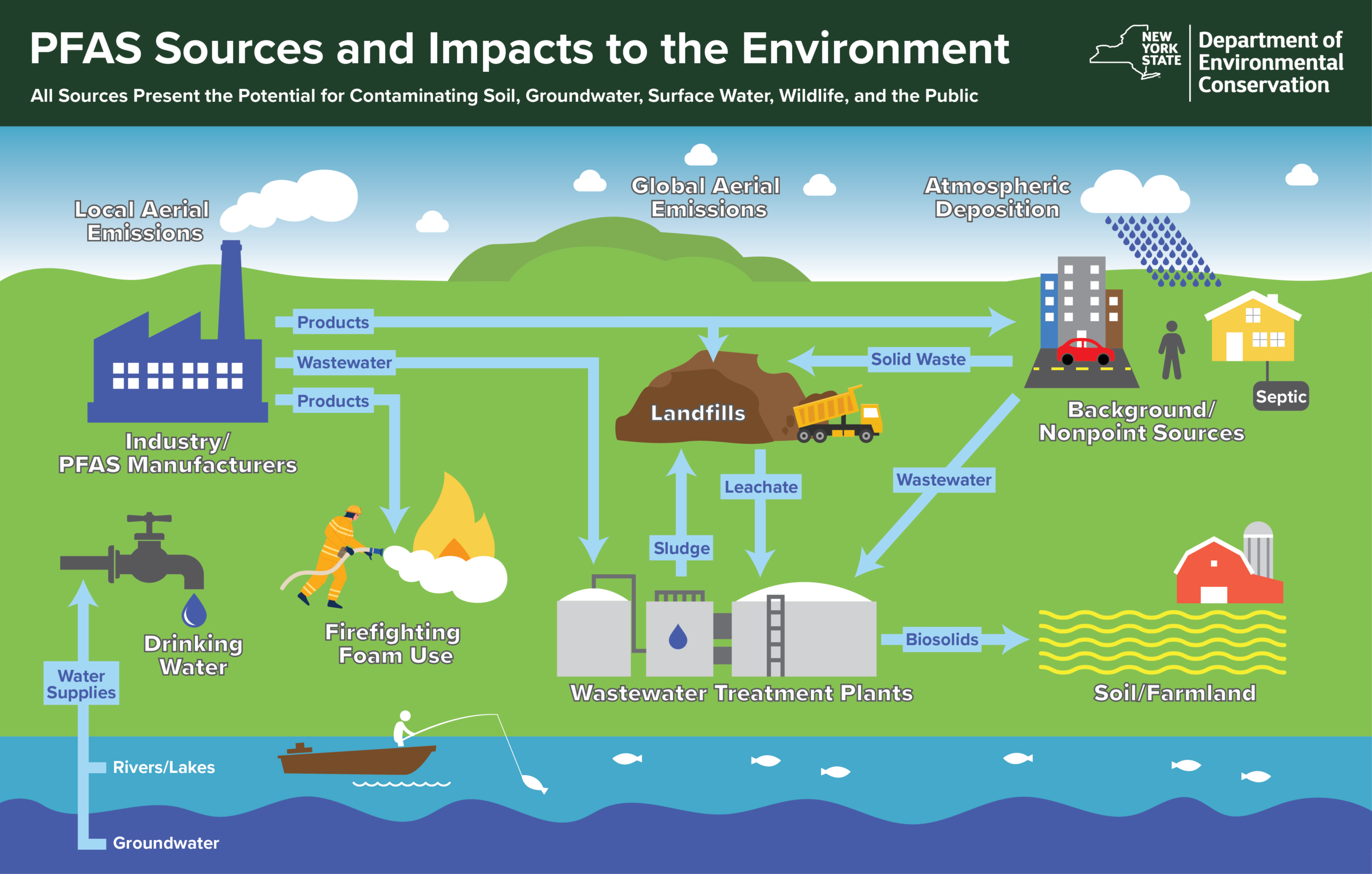
PFAS are ubiquitous in consumer and industrial applications, and hence in water supplies, wildlife, and humans. (New York State Department of Environmental Conservation)
PFAS’ ubiquity in consumer and industrial applications explains their presence in human tissues, where they cause diseases including immune suppression, cancer, liver damage and reproductive and developmental harms.
It also explains their presence in 83 percent of tested rivers, lakes, and streams, and in wildlife in remote areas.
States have begun to regulate PFAS, with 37 states placing limitations on its permitted levels in drinking water. Federal regulations were a long time coming, but the Biden administration for the first time set limits on PFAS in drinking water and proposed standards that would limit their discharge by chemical manufacturers.
True to form, the Trump administration has announced rollbacks to these regulations. The administration has withdrawn PFAS discharge limits, leaving no limit to the amount that chemical manufacturers can discharge into waterways. And while limits on the two most common PFAS chemicals will remain, industry has until 2031 to comply. The administration says it will rescind and reconsider limits on four other PFAS chemicals established by Biden.
EPA has long failed to regulate PFAS in biosolids, which may contaminate 70 million acres of farmlands and pose significant risks to humans, livestock, and wildlife. Several states have banned or limited application of biosolids, but EPA’s efforts have been limited to risk assessments.
Biden’s risk assessment would have drastically limited the use of biosolid fertilizers, but Republicans in Congress last summer killed the process after meeting with a sludge industry trade group. A new Trump risk assessment of biosolid fertilizers, advocates say, sugarcoats the risks.
Captured Agencies Do Industry’s Bidding
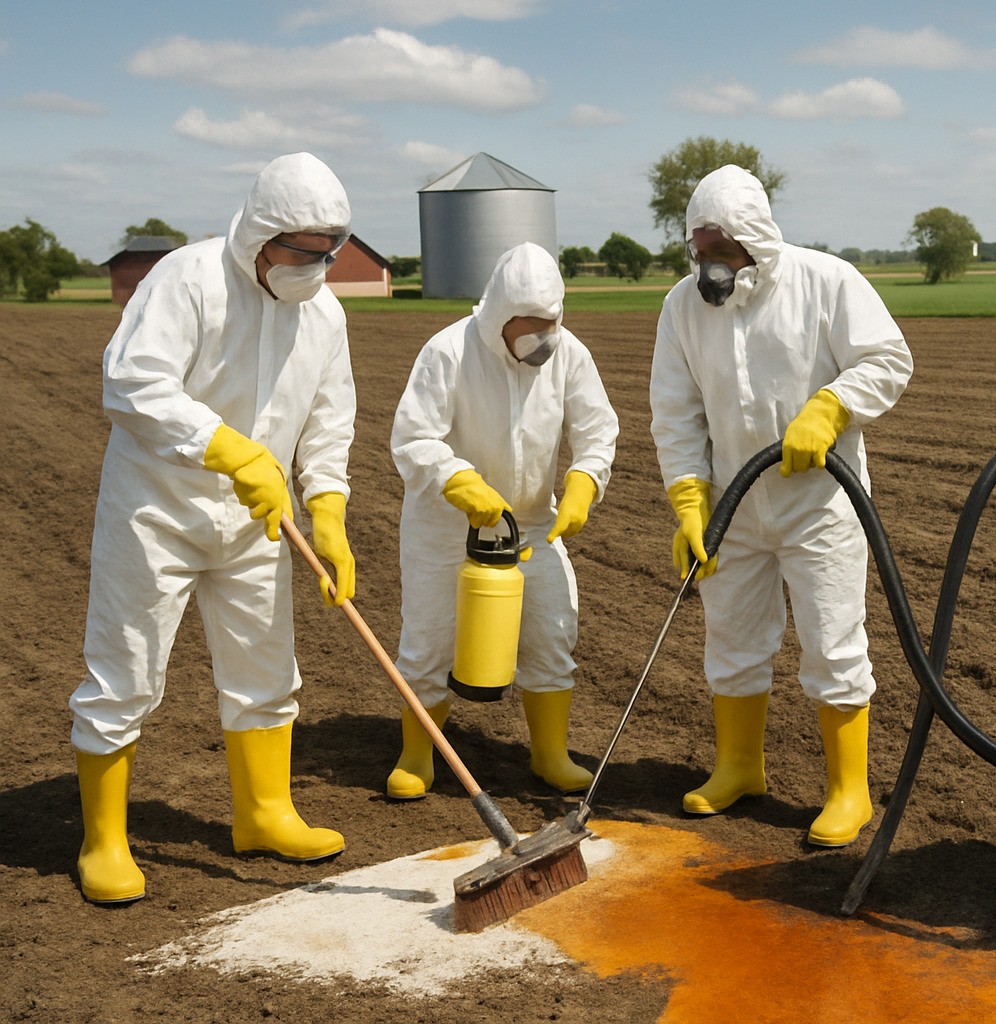
Entire regulatory systems are at risk in agencies staffed and influenced by the industries they are supposed to regulate (Farm & Country Insurance, CC BY-NC 4.0)
While somehow coming as a shock to MAHA, Trump’s actions to facilitate chemical industry growth will not surprise most. The top four positions in Trump’s EPA toxics office are held by former industry lobbyists.
Among them is Kyle Kunkler, who now oversees the EPA’s pesticide program and was formerly with the American Soybean Association. Such groups are a major force for chemical agriculture, says Bill Freese, Science Director for the Center for Food Safety. Groups that ostensibly represent farmers have a far more benign public image than the pesticide industry itself. Their relative credibility, Freese noted in an interview with the Herald, is one reason why fighting chemical agriculture has been such an uphill battle.
At the behest of such powerful lobbies, the administration is poised to dismantle the entire chemical risk evaluation system. The Biden EPA’s approach to chemical risk evaluation under the Toxic Substances Control Act (TSCA) required a determination of risk for a chemical as a whole, taking into account many possible pathways of exposure. The new system would require evaluation of each of a chemical’s individual uses, ignoring cumulative effects. And it would pre-empt state bans, like those of PFAS.
Trump’s deregulatory whirlwind has also touched down on Biden’s chemical accident prevention rule, with a proposal to weaken it significantly.
Road to Growth Paved with Chemical Deregulation
This dizzying array of chemical deregulatory actions may well lead to GDP growth. AI data centers will be major beneficiaries, as many of their components contain PFAS. In its enthusiasm for this industry, the administration has announced that it will prioritize TSCA review of new chemicals needed for data center construction.
Chemical, wastewater, and agricultural industries will also surely benefit from the lax regulatory climate.
Apologists for chemical-laden agricultural systems will argue that these systems are essential to feed a planet of 8.3 billion and counting. But this narrative “is just gaslighting us to support greater use of chemicals and industrial agriculture,” says Freese. “We overproduce food.”
The purpose of chemical agriculture, Freese says, is not so much agricultural productivity, but reducing labor costs. “It’s about getting people out of the picture and replacing labor with capital.”
Agricultural systems that are compatible with human health and a finite planet will take more than just new combinations of chemicals and genetically-modified plants.

Growing food to feed humans directly, rather than to feed livestock, uses a fraction of the pesticides, herbicides, fertilizer, and land area. (Scienmag, CCO 1.0)
As Freese noted, the vast majority of pesticides, herbicides, and petrochemical fertilizer are used on the corn, soybean, and other commodity crop monocultures that blanket most agricultural land in the US and across the world. For the most part, these are crops that feed livestock, not humans. Far fewer chemicals, and half the land area, would be required if we grew crops primarily for direct human consumption instead of for livestock
A transition to plant-based agriculture would be a giant step toward an agricultural system in line with planetary limits. But it would not be the entire journey. Agricultural systems that cover 40 percent of the planet’s ice-free land area account for an enormous share of the human ecological footprint. The administration’s unrestrained growth agenda cannot lean even more heavily upon these systems without deepening irreversible ecological damage.
An agriculture of the future must certainly be less chemically dependent, and it must embrace more organic, regenerative, and plant-based elements. It must also go through a phase of degrowth to a steady state, along with a human population and economy that fit on a finite planet.
 Kirsten Stade is a staff writer at CASSE.




Leave a Reply
Want to join the discussion?Feel free to contribute!
(No profanity, lewdness, or libel.)